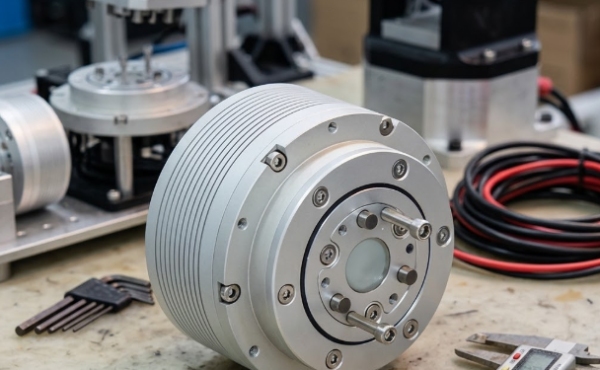
When a high-end printing press lays down ink with flawless registration, when a medical scanner moves its probe with sub-millimeter accuracy, when a laser cutter traces a complex contour without deviation, or when an automated assembly line cycles thousands of times a day without missing a beat—the credit usually goes to the control system, the servo motor, or the software. Rarely does anyone mention the component quietly translating motor speed into controlled, precise motion: the planetary gearbox.
Yet for equipment designers and manufacturers, this "hidden component" is often where performance is won or lost. As a company dedicated to the design and production of planetary gearboxes for printing, medical, laser, and automation equipment, we believe the story of precision motion deserves to be told from the inside out.
Why Planetary Architecture?
The planetary gearbox takes its name from its arrangement: a central sun gear drives several planet gears that rotate within a fixed ring gear, all carried by a planet carrier. This compact layout offers inherent advantages. Load is shared across multiple planet gears simultaneously, so torque is distributed rather than concentrated on a single tooth. The result is high torque density in a short, coaxial package—an invaluable trait when machine builders are fighting for every cubic centimeter of space.
Equally important, the symmetric arrangement of planet gears balances radial forces, reducing bearing loads and vibration. For equipment that must run smoothly and quietly—medical devices in a clinical setting, printing machines in an office environment—this structural calmness is a genuine asset.
Precision Is Not a Feature; It Is the Foundation
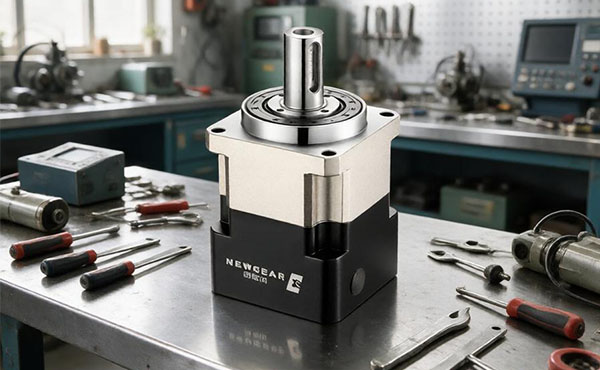
In each of our target applications, backlash is the enemy. In printing equipment, excessive backlash shows up as registration errors and inconsistent dot placement. In laser systems, it becomes path deviation and ragged edges. In medical devices, it undermines the repeatability that clinicians depend on. In automation, it erodes positioning accuracy cycle after cycle.
We address this at the source: precision gear grinding, tightly controlled tooth flank geometry, and careful assembly tolerances that bring backlash down to arcminute levels, with gear accuracy held to ISO 4 grade or better. Just as important is consistency—the same low backlash in unit one thousand as in unit one. For multi-axis systems where phase relationships matter, this repeatability is what keeps every axis in agreement.
Rigidity and Responsiveness Under Real Loads
Real machines do not run at constant speed. They accelerate, decelerate, reverse, and absorb shock loads. A transmission with insufficient torsional rigidity behaves like a spring—it winds up under load and releases energy unpredictably, causing overshoot and settling time that no control loop can fully compensate for.
Our planetary gearboxes are engineered for stiffness. Optimized planet carrier structures and carefully selected bearing arrangements raise torsional rigidity and increase radial and axial load capacity at the output end. In high-speed paper feed, rapid laser scanning, or high-cycle automation, this translates into shorter response times, cleaner trajectories, and quieter operation. The machine does what the controller commands—promptly and without hesitation.
Efficiency, Heat, and the Long Run
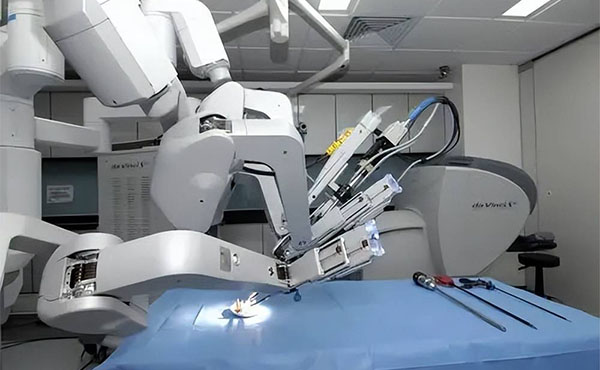
Transmission efficiency above 95% per stage is not merely a catalog figure. It means less energy lost as heat, lower temperature rise, and longer lubricant life. In medical equipment, where thermal stability can affect measurement, low heat generation is a design requirement rather than a bonus. In automation, efficiency compounds across thousands of operating hours into measurable energy savings and reduced maintenance burden. Long-life lubrication and robust sealing—up to IP65 where needed—keep performance stable in dusty printing environments and washdown-adjacent medical settings alike.
Built Around the Application, Not the Catalog
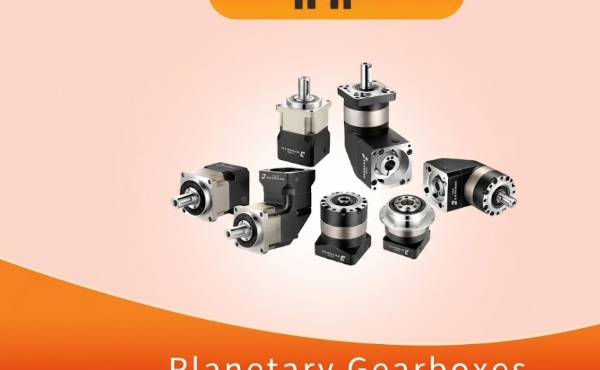
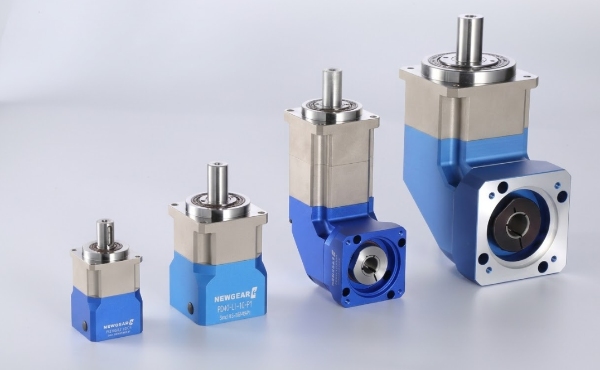
No two applications ask the same questions. Printing equipment prioritizes smooth, quiet, high-speed rotation. Medical devices demand cleanliness, reliability, and minimal acoustic signature. Laser systems need dynamic responsiveness and positioning accuracy. Automation calls for durability and flexible configuration. Our portfolio—standard precision series, right-angle configurations for constrained spaces, and heavy-duty variants for high-load duties—is organized around these differences, and our engineering team works with customers to match ratio, backlash class, and interface to the actual motion profile.
The Component That Earns Its Keep
A planetary gearbox never appears on a product brochure. But it earns its place in every machine it serves—through accuracy that holds, rigidity that resists, efficiency that endures, and reliability that keeps production running. We are proud to build that component, and prouder still to see it at work in the printing, medical, laser, and automation equipment that moves modern industry forward. Precision, after all, is not an abstraction. It is engineered, one gearbox at a time.


 EN
 en
 vi
 it
 es
 th
 tr
 ja
 pt
 ko
 ru
 fr
 de
 ar
 Request Quote