Position: Home > News Center > Industry News > From Torque to Timing: The Critical Role of Toothed Idler Pulleys
From Torque to Timing: The Critical Role of Toothed Idler Pulleys
Apr. 13, 2026 Views:389
In high-performance mechanical systems, precision is not optional—it is fundamental. Whether in automation equipment, CNC machinery, robotics, or power transmission assemblies, maintaining accurate belt tracking and tension is critical for system stability and efficiency. Among the components that enable this precision, the toothed idler pulley plays a central yet often underestimated role.
Far beyond a passive guiding component, modern toothed idler pulleys are engineered to enhance synchronization, reduce wear, and ensure consistent torque transmission. Manufacturers such as iHF Group have elevated the design and manufacturing standards of these components, integrating advanced materials, precision machining, and flexible configurations to meet diverse industrial demands.
1. What Is a Toothed Idler Pulley?
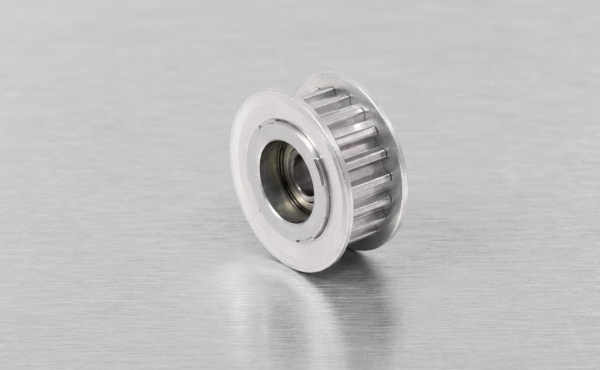
A toothed idler pulley for timing belt systems is a precision-machined component designed to guide, support, and maintain tension in synchronous belt drives. Unlike smooth idlers, toothed variants engage directly with the belt teeth, ensuring:
Positive engagement without slippage
Accurate timing and synchronization
Reduced belt wear and vibration
This makes them indispensable in systems where positional accuracy and repeatability are critical.
The pulley body and integrated flanges are machined from 6061 aluminum alloy, offering:
Excellent strength-to-weight ratio
Corrosion resistance
High machinability for precision geometry
This material choice ensures lightweight toothed idler pulleys for industrial automation, reducing system inertia while maintaining structural integrity.
2.2 Steel Bearing Integration
Durability and smooth operation depend heavily on bearing quality.
Key benefits of steel bearings include:
High load-bearing capacity
Low friction rotation
Long service life under continuous operation
iHF Group integrates high-grade bearings to ensure high durability toothed idler pulleys with smooth rotation performance.
3. Surface Treatment Options for Performance Enhancement
Surface finishing directly impacts wear resistance and environmental adaptability.
3.1 Clear Anodizing
Enhances corrosion resistance
Maintains metallic appearance
Suitable for general industrial environments
3.2 Nickel Plating
Increases surface hardness
Improves wear resistance
Ideal for high-load or abrasive conditions
These options allow for custom surface-treated toothed idler pulleys for harsh environments.
4. Tooth Count Flexibility: Adapting to System Requirements
Toothed idler pulleys are available with 16 to 60 teeth, enabling:
Flexible speed ratio adjustments
Compatibility with various belt pitches
Adaptation to compact or large-scale systems
This range supports custom tooth count idler pulleys for timing belt optimization, ensuring design flexibility across applications.
5. Bearing Configurations: Tailored Performance
5.1 Center Bearing Type
Compact structure
Suitable for standard loads
Ideal for space-constrained designs
5.2 Dual Bearing Type
Enhanced stability
Higher load capacity
Reduced deflection under stress
This configuration is essential for heavy-duty toothed idler pulleys for high load applications.
iHF Group provides both configurations, allowing engineers to select the optimal design based on operational demands.
6. Functional Advantages in Power Transmission Systems
6.1 Improved Belt Tracking
Toothed engagement ensures precise alignment, reducing the risk of belt misalignment.
6.2 Reduced Vibration and Noise
Accurate meshing minimizes dynamic instability, resulting in quieter operation.
6.3 Enhanced System Efficiency
By eliminating slippage, toothed idlers improve energy transfer efficiency.
6.4 Extended Component Lifespan
Reduced wear on belts and pulleys leads to longer maintenance intervals.
These benefits make precision toothed idler pulleys for synchronous belt drives essential in modern machinery.
7. Industrial Applications
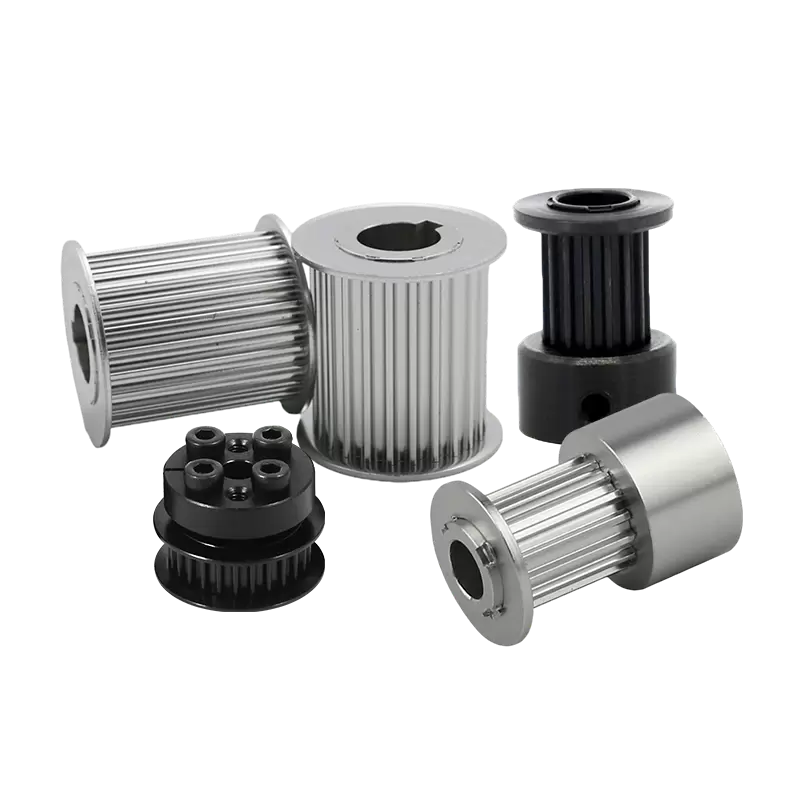
Toothed idler pulleys are widely used in:
Automation Equipment
Ensuring precise motion control in robotic systems.
CNC Machinery
Maintaining accurate positioning in high-speed machining.
Packaging Systems
Supporting continuous, synchronized operations.
3D Printing and Robotics
Providing stable and repeatable motion control.
Automotive Systems
Used in timing mechanisms and auxiliary drives.
8. Manufacturing Precision and Quality Control
The performance of a toothed idler pulley depends heavily on manufacturing accuracy.
Key Quality Factors:
Tooth profile precision
Concentricity and balance
Bearing alignment
Surface finish quality
iHF Group utilizes advanced CNC machining and strict inspection protocols to ensure high precision machined toothed idler pulleys for industrial systems.
9. Selection Guidelines for Engineers
When choosing a toothed idler pulley, consider:
Load Requirements
Select single or dual bearing configurations accordingly.
Environmental Conditions
Choose appropriate surface treatments.
Belt Compatibility
Ensure matching tooth profile and pitch.
Space Constraints
Opt for compact designs when necessary.
Working with experienced manufacturers like iHF Group ensures access to custom engineered toothed idler pulley solutions.
视频
10. Frequently Asked Questions (FAQ)
Q1: What is the difference between a toothed idler pulley and a smooth idler?
A toothed idler engages with the belt teeth for positive drive, while a smooth idler relies on friction and is used mainly for tensioning.
Q2: When should I choose a dual bearing idler pulley?
Dual bearing designs are recommended for high-load or high-speed applications where stability is critical.
Q3: Does surface treatment really matter?
Yes. Anodizing improves corrosion resistance, while nickel plating enhances wear resistance in demanding environments.
Q4: How do I select the correct tooth count?
Tooth count depends on belt pitch, system layout, and desired speed ratios. Engineering consultation is recommended.
Q5: Are aluminum pulleys strong enough for industrial use?
Yes. 6061 aluminum offers an excellent balance of strength and weight, especially when combined with steel bearings.
Conclusion
The toothed idler pulley is a vital component in precision-driven systems, ensuring accurate motion control, efficient power transmission, and long-term reliability. With advanced materials like 6061 aluminum, robust steel bearings, and flexible design configurations, modern idler pulleys deliver performance far beyond basic guidance functions.
Manufacturers such as iHF Group continue to push the boundaries of engineering excellence, providing customizable, high-performance solutions tailored to the evolving demands of industrial automation and mechanical design.
For engineers and system designers, investing in high-quality toothed idler pulleys is not just a component choice—it is a strategic decision that directly impacts system efficiency and durability.
This website uses cookies to provide you with a safer and more personal experience. By accepting, you agree to the Cookie Policy and the use of cookies for advertising and analytics purposes.


 EN
EN en
en vi
vi it
it es
es th
th tr
tr ja
ja pt
pt ko
ko ru
ru fr
fr de
de ar
ar Request Quote