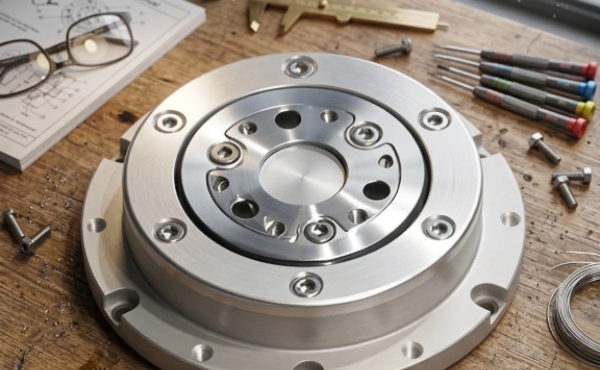
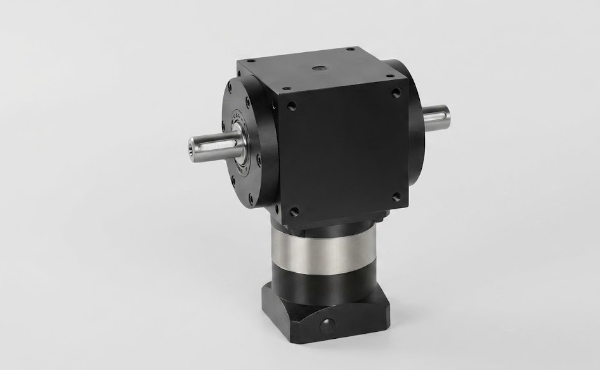
In the competitive world of high-end equipment manufacturing, every component earns its place through performance. Motors get specified for torque and speed, controllers for intelligence and connectivity, and frames for rigidity. But between the motor and the load sits a component whose quality quietly determines whether the entire system delivers on its promises: the planetary gearbox. For printing equipment, medical devices, laser systems, and automation machinery, choosing the right planetary gearbox is not a detail—it is a decision that shapes accuracy, uptime, and total cost of ownership.
As a manufacturer dedicated to planetary gearbox design and production, we build our products around a simple conviction: the transmission should never be the limiting factor in a precision machine.
The Structural Advantage of Planetary Design
The planetary gearbox earns its name from its arrangement—a central sun gear drives multiple planet gears that rotate inside a ring gear, all held by a planet carrier that delivers the output. This architecture offers practical benefits that matter to machine designers. Because several planet gears share the load simultaneously, torque capacity is high relative to size, and the coaxial layout keeps the gearbox short and easy to integrate. The symmetric arrangement also balances radial forces, reducing bearing stress and vibration.
These advantages explain why planetary gearboxes have become the default choice for servo applications. But the architecture alone does not guarantee performance. The difference between a good gearbox and a great one lies in execution: gear grinding quality, heat treatment, carrier stiffness, bearing selection, sealing, and assembly consistency. These are the areas where we concentrate our engineering effort.

Accuracy That Holds Over Time
In printing equipment, backlash translates directly into registration error. In laser systems, it becomes path deviation. In medical devices, it undermines repeatability that clinicians depend on. In automation, it accumulates across cycles until positioning accuracy degrades.
We control backlash at the source through precision gear grinding and tightly managed assembly tolerances, achieving arcminute-level backlash with gear accuracy of ISO 4 grade or better. Crucially, we maintain this precision consistently across production runs—because a specification that varies from unit to unit is not a reliable specification. For multi-axis systems, this consistency keeps every axis synchronized over millions of operating cycles.
Rigidity for Real-World Dynamics
Precision at rest is easy. Precision during acceleration, deceleration, and load fluctuation is the actual requirement. A gearbox with insufficient torsional rigidity deflects under load like a spring, releasing energy unpredictably and causing overshoot that no control loop can fully correct.
Our gearboxes are engineered for stiffness. Reinforced planet carriers, optimized bearing arrangements, and rigid output interfaces raise torsional rigidity and increase radial and axial load capacity. In high-speed paper feed, rapid laser scanning, and high-cycle automation, this stiffness shortens settling time and reduces trajectory error, so the machine follows its commanded path cleanly, cycle after cycle.
Efficiency, Heat, and Long-Term Reliability
Single-stage transmission efficiency above 95% is more than a catalog figure—it means less energy lost as heat, lower temperature rise, and longer lubricant life. In medical equipment, where thermal stability can affect measurement accuracy, low heat generation is a design requirement. In automation, efficiency compounds over thousands of operating hours into measurable energy savings and reduced maintenance.
Robust sealing, up to IP65 where needed, keeps performance stable in dusty printing environments and cleaning-intensive medical settings. Long-life lubrication reduces maintenance frequency, and heavy-duty variants strengthen bearings and seals for high-load duties, ensuring consistent performance over extended service life.

A Portfolio Built Around Applications
No two applications ask the same questions. Printing equipment prioritizes smooth, quiet, high-speed rotation. Medical devices demand reliability, low acoustic noise, and thermal stability. Laser systems require dynamic responsiveness and positioning accuracy. Automation calls for durability and flexible integration.
Rather than offering a single compromise design, we maintain a portfolio—standard precision series, right-angle variants for space-constrained installations, and heavy-duty models for high-load duties—and we work with customers to match ratio, backlash class, and mechanical interface to the actual motion profile. Our engineering team supports selection and integration, so the gearbox fits the machine rather than the machine accommodating the gearbox.
The Component That Earns Its Keep
A planetary gearbox will never be the headline feature of a machine. But when it is engineered well, it disappears into the background—no vibration, no drift, no maintenance interruptions, no unexplained errors. That disappearance is the highest compliment a transmission component can receive.
We build planetary gearboxes for machines that demand exactly that: printing equipment that reproduces perfectly, medical devices that clinicians can trust, laser systems that cut and mark with confidence, and automation that runs without drama. The motion may be invisible. The engineering behind it is not.


 EN
 en
 vi
 it
 es
 th
 tr
 ja
 pt
 ko
 ru
 fr
 de
 ar
 Request Quote