Position: Home > News Center > Industry News > The Arteries of Automation: Engineering Long-Life Connectivity with High-Capacity Cable Carriers
The Arteries of Automation: Engineering Long-Life Connectivity with High-Capacity Cable Carriers
Jul. 03, 2026 Views:1
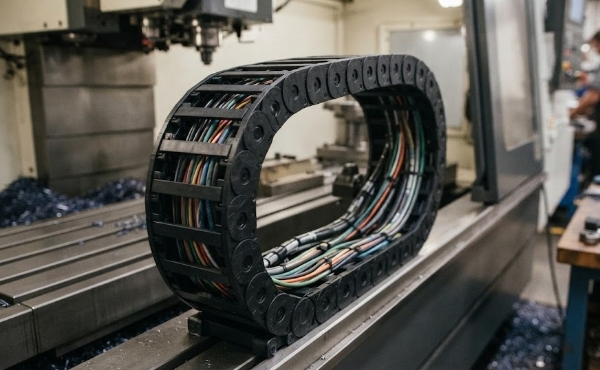
In the landscape of modern manufacturing, automation is the pulse of productivity. Yet, the reliability of complex robotic arms, CNC machining centers, and automated logistics systems depends on one often-overlooked component: the cable carrier. These systems are the "arteries" of the factory, housing the electrical cables, hydraulic hoses, and pneumatic lines that deliver essential power and data to moving machinery.
If the cable management system fails, the entire production line stops. This is why engineers and procurement specialists are increasingly prioritizing premium heavy duty cable carrier solutions capable of withstanding millions of high-speed cycles in harsh industrial environments. Whether you are dealing with high-heat machining zones or high-friction automated assembly, the structural integrity of your cable management dictates your operational ROI.
iHF Group has emerged as a leader in this critical sector, providing robust solutions that combine material science innovation with logistical agility. For partners seeking iHF Cable Carrier Wholesale opportunities, our commitment to durability and technical precision ensures that your infrastructure investment yields maximum service life.
1. Material Evolution: The Advantage of Nylatrac Cable Carrier Systems
When selecting a protective enclosure for vital cables, material composition is non-negotiable. Modern nylatrac cable carrier systems are engineered from high-performance, glass-reinforced polyamide. This material provides an exceptional strength-to-weight ratio, allowing the carrier to support substantial weight while maintaining a low mass that minimizes the energy required for rapid acceleration.
Why choose high-grade nylon-based carriers?
● Wear Resistance: These materials are self-lubricating, meaning that when the cables rub against the inner walls of the carrier during motion, the friction remains minimal, preventing fraying and insulation degradation.
● Thermal Stability: Industrial environments often involve extreme temperature fluctuations. High-quality nylon carriers maintain their structural rigidity under high heat and do not become brittle in cold-storage applications.
● Chemical Compatibility: Factory floors are often exposed to oils, coolants, and solvents. Premium carriers resist these substances, ensuring that the structural shell does not degrade or crack, which would expose internal cables to damage.
2. Engineered for Intensity: The Heavy Duty Cable Carrier Standard
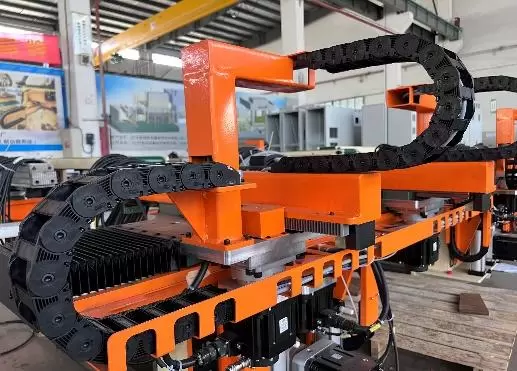
In sectors such as heavy mining, automotive stamping, and large-scale maritime port logistics, standard plastic drag chains are insufficient. Here, only a heavy duty cable carrier will suffice.
The engineering difference lies in the design of the cross-bars and the side-link connection. A high-performance carrier must possess:
● Load-Bearing Rigidity: The ability to bridge long unsupported spans without sagging, which prevents the cables from catching on debris or nearby structures.
● Superior Tensile Strength: In high-speed, long-travel applications, the force exerted on the carrier during acceleration can be immense. iHF Group designs these carriers with reinforced side links to ensure the chain remains intact even under peak mechanical load.
● Modular Versatility: Being able to customize the interior width and separation of channels is vital. This allows the integrator to organize power and data cables separately, preventing electromagnetic interference (EMI) that can disrupt sensitive control signals.
3. Global Sourcing Strategy: Navigating iHF Cable Carrier Wholesale
For large-scale machine builders and MRO (Maintenance, Repair, and Operations) distributors, finding a reliable supplier is about more than just the product—it is about supply chain stability.
Opting for iHF Cable Carrier Wholesale programs provides several strategic advantages:
● Inventory Consistency: By partnering directly with a manufacturer like iHF Group, you ensure that the specifications remain identical across every production batch, critical for maintaining standardized service schedules.
● Engineering Consultation: Beyond merely selling a product, iHF Group offers technical support to calculate the bending radius and load-bearing requirements for your specific machine architecture.
● Cost-Efficiency at Scale: Bulk procurement allows for a significant reduction in the per-unit cost, which is essential for projects that require thousands of meters of cable management infrastructure.
视频
4. Frequently Asked Questions (FAQ)
Q: How do I calculate the correct bending radius for my application?
A: The bending radius should be at least 8 to 10 times the outer diameter of the largest cable inside the carrier. This ensures that the cable core is not subjected to excessive tensile stress during the flex cycle.
Q: Can I mix hydraulic hoses and electrical cables in the same carrier?
A: Yes, but you must use internal dividers to keep them separated. It is best practice to place heavy hoses at the bottom and sensitive data cables at the top, ensuring they do not tangle or interfere with each other.
Q: What is the benefit of a "snap-open" design?
A: Snap-open cross-bars allow for rapid installation and maintenance. You can easily insert or replace a cable without disassembling the entire carrier system, drastically reducing machine downtime.
This website uses cookies to provide you with a safer and more personal experience. By accepting, you agree to the Cookie Policy and the use of cookies for advertising and analytics purposes.


 EN
EN en
en vi
vi it
it es
es th
th tr
tr ja
ja pt
pt ko
ko ru
ru fr
fr de
de ar
ar Request Quote