In modern mechanical transmission systems, precision, stability, and efficiency are no longer optional—they are fundamental design requirements. Industries such as industrial automation, robotics, CNC machinery, packaging systems, and precision instrumentation depend heavily on gear systems that can deliver consistent torque transmission with minimal loss and long-term durability.
Among the various gear types used in mechanical engineering, straight-tooth gears (spur gears) remain one of the most widely adopted configurations due to their simplicity, efficiency, and reliability in parallel-shaft power transmission systems.
When combined with advanced surface treatment processes such as blackening and precision machining techniques, high-precision blackened straight-tooth gears offer enhanced wear resistance, corrosion protection, and operational stability in demanding industrial environments.
As a global supplier of precision mechanical components, iHF Group provides engineered gear solutions designed to meet the performance requirements of modern high-load and high-speed transmission systems.
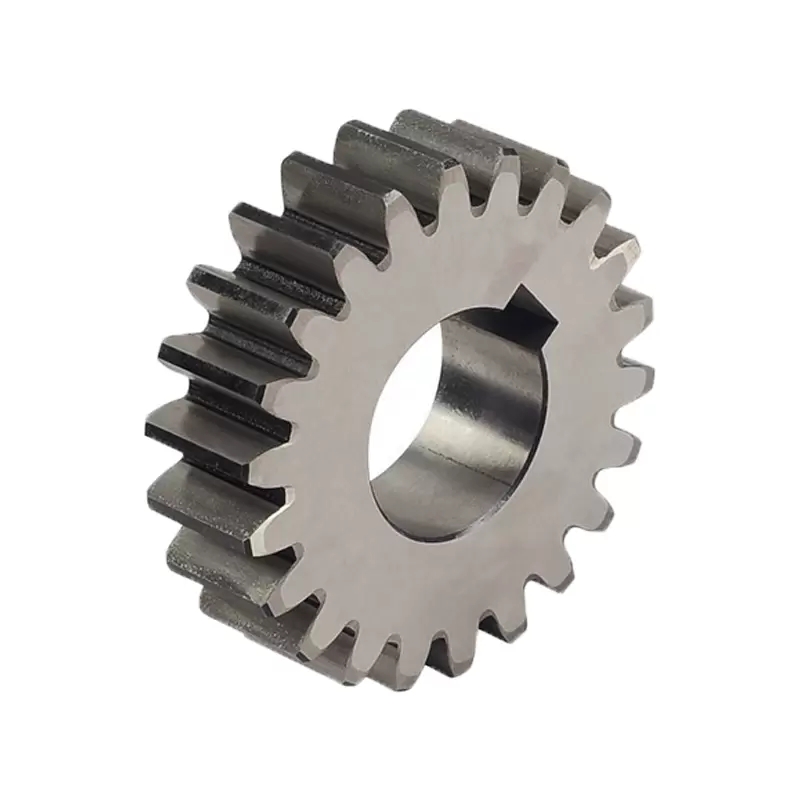
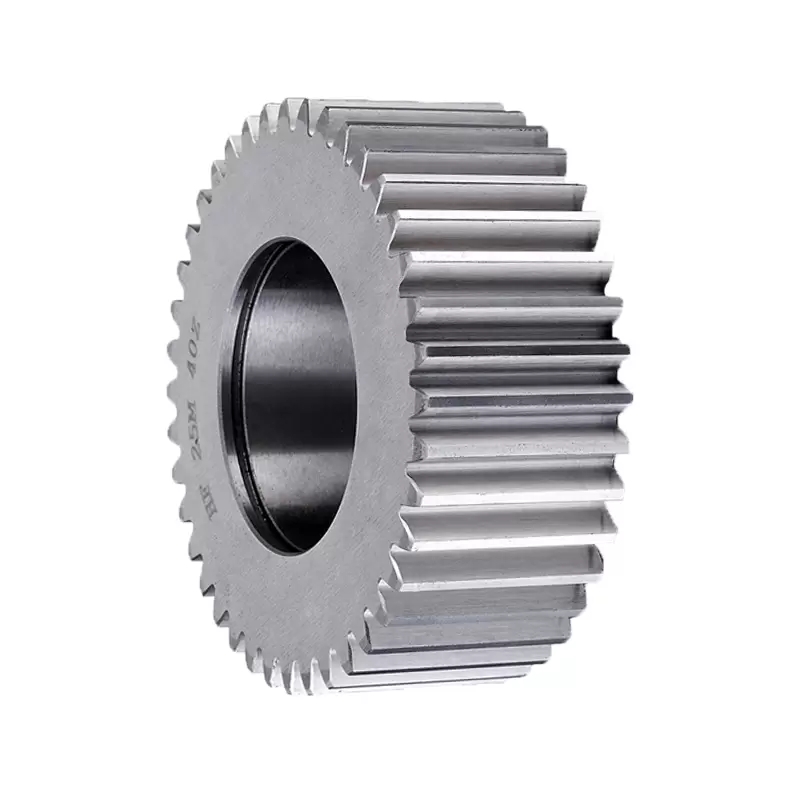
Working Principle of Straight-Tooth Gear Transmission Systems
Straight-tooth gear drives transmit motion and power through the meshing of a driving gear and a driven gear. This mechanism is primarily used for power transmission between two parallel shafts.
The operation principle is based on direct tooth engagement, where torque is transferred through contact forces along the gear tooth profile.
Key functional characteristics include:
● Continuous torque transmission through gear meshing
● Fixed transmission ratio ensuring predictable output speed
● High mechanical efficiency due to minimal sliding loss
● Stable rotational motion between parallel shafts
Because of its straightforward geometry and predictable performance, the straight-tooth gear remains a foundational element in mechanical engineering design.
Engineering Advantages of Gear Drive Systems
Gear transmission systems offer several important advantages that make them suitable for industrial applications:
High Transmission Efficiency
Compared with belt or chain drives, gear systems achieve significantly higher efficiency due to direct mechanical engagement between teeth.
Constant Transmission Ratio
Gear meshing ensures a fixed ratio between input and output rotation, enabling precise motion control in mechanical systems.
Reliable Operation
Properly manufactured gear systems provide long service life and stable performance under continuous load conditions.
Flexible Mechanical Integration
Gear systems can be designed to transmit motion between various spatial configurations of shafts, enhancing mechanical design flexibility.
Strong Load Capacity
Straight-tooth gears are capable of handling moderate to high torque loads, especially when manufactured using high-strength alloy steels.
Why Blackening Treatment Matters in Gear Performance
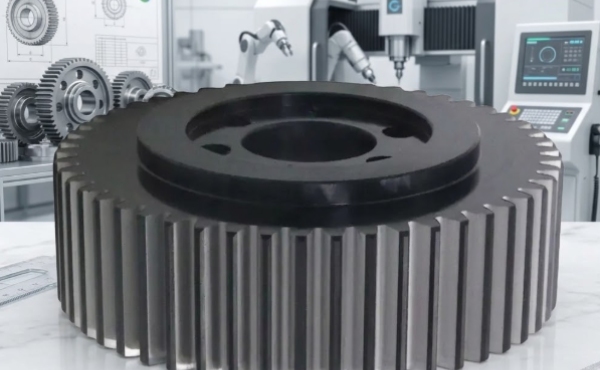
The blackening process is a chemical surface treatment that forms a protective oxide layer on steel gear surfaces.
For high-precision blackened straight-tooth gears, this treatment provides multiple performance advantages:
Improved Corrosion Resistance
The oxide layer helps protect the gear surface from moisture, oxidation, and industrial contaminants.
Reduced Surface Wear
Blackened surfaces can improve initial wear-in behavior and reduce early-stage friction damage.
Enhanced Surface Stability
The treatment improves dimensional surface stability without significantly affecting gear geometry or accuracy.
Industrial Aesthetic and Identification
Blackened gears are often used in professional mechanical systems where visual identification and surface uniformity are important.
Precision Manufacturing and Material Engineering
The performance of a gear system depends heavily on manufacturing precision and material selection.
High-quality straight-tooth gears typically undergo:
● CNC gear hobbing and shaping
● Heat treatment for hardness improvement
● Precision grinding for tooth profile accuracy
● Surface blackening for durability enhancement
● Dynamic balancing for high-speed applications
Common materials include alloy steels such as 20CrMnTi and 45# steel, selected for their strength, hardness, and machinability.
Strict control of tooth profile accuracy ensures smooth meshing, reduced vibration, and improved transmission efficiency.
Application Scenarios of High-Precision Blackened Straight-Tooth Gears
Due to their reliability and structural simplicity, these gears are widely used across multiple industries:
Industrial Automation Systems
Used in conveyor systems, robotic actuators, and automated production lines requiring stable and repeatable motion.
CNC Machinery
Ensure precise spindle and feed transmission, where accuracy directly affects machining quality.
Packaging Machinery
Support synchronized motion systems in high-speed filling, sealing, and labeling equipment.
Mechanical Engineering Equipment
Widely applied in reducers, gearboxes, and general industrial drive systems.
Precision Instrumentation
Used in devices requiring controlled motion transmission with minimal backlash.
Design Considerations in Gear System Selection
When selecting straight-tooth gear systems, engineers typically evaluate:
Load Requirements
Determining torque capacity and expected operational stress levels.
Speed Conditions
High-speed applications require stricter balancing and surface finishing standards.
Alignment Accuracy
Misalignment between parallel shafts can significantly affect gear life and efficiency.
Noise and Vibration Control
Straight-tooth gears may generate higher noise levels compared to helical gears, making precision manufacturing essential.
Lubrication Conditions
Proper lubrication ensures reduced friction, improved efficiency, and extended service life.
iHF Group: Engineering Precision Gear Transmission Solutions
As a professional manufacturer of mechanical transmission components, iHF Group focuses on delivering high-performance gear systems designed for industrial-grade applications.
The company’s high-precision blackened straight-tooth gears are engineered with emphasis on:
● Dimensional accuracy and tooth profile precision
● Stable transmission performance under continuous load
● High-strength alloy material selection
● Controlled heat treatment processes
● Reliable surface blackening technology
By integrating advanced machining techniques with strict quality control systems, iHF Group ensures that each gear meets the performance expectations of modern industrial equipment manufacturers.
Industry Trends in Gear Transmission Technology
As industrial automation continues to evolve, gear technology is also advancing in several key directions:
Higher Precision Manufacturing
Tighter tolerances and improved CNC machining capabilities are enabling more efficient transmission systems.
Noise Reduction Optimization
Advanced tooth profile modifications are being developed to reduce operational noise.
Surface Engineering Improvements
Enhanced coatings and treatments are improving wear resistance and corrosion protection.
Lightweight and High-Strength Materials
New alloy compositions are enabling higher load capacity with reduced system weight.
These trends highlight the ongoing importance of precision engineering in mechanical transmission systems.
Conclusion
High-precision blackened straight-tooth gears remain a critical component in modern mechanical transmission systems due to their simplicity, efficiency, and reliability. When manufactured with advanced machining techniques and surface treatment processes, they deliver stable performance across a wide range of industrial applications.
From CNC machinery and automation systems to packaging and instrumentation equipment, these gears provide a dependable solution for parallel shaft power transmission.
With strong engineering capability and precision manufacturing expertise, iHF Group continues to support global industries with high-quality gear transmission solutions designed for long-term performance and operational stability.


 EN
EN en
en vi
vi it
it es
es th
th tr
tr ja
ja pt
pt ko
ko ru
ru fr
fr de
de ar
ar Request Quote