

 EN
EN en
en vi
vi it
it es
es th
th tr
tr ja
ja pt
pt ko
ko ru
ru fr
fr de
de ar
ar Request Quote
Product Center
Contact Us


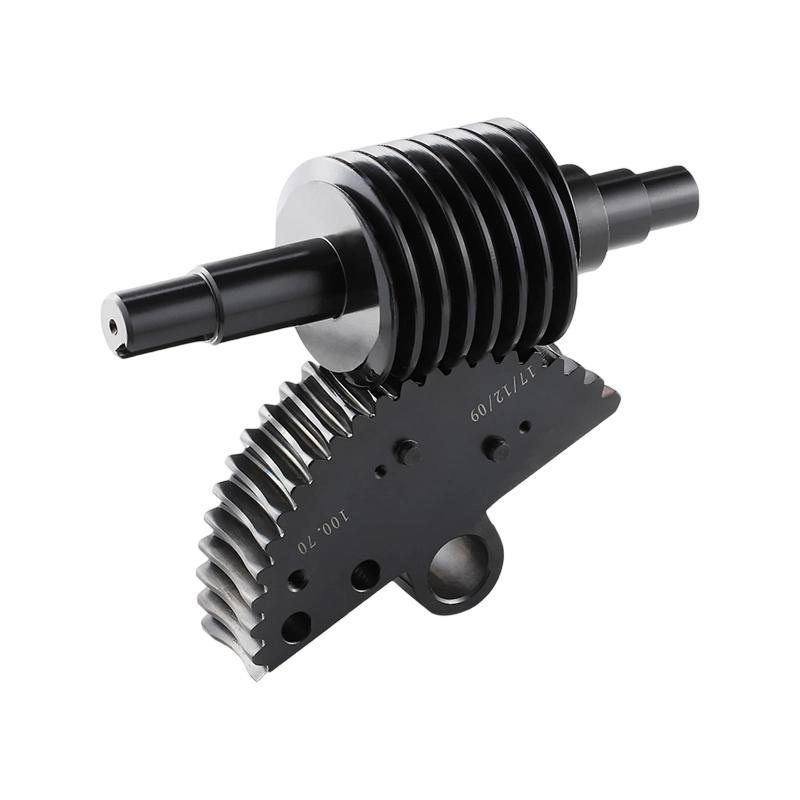
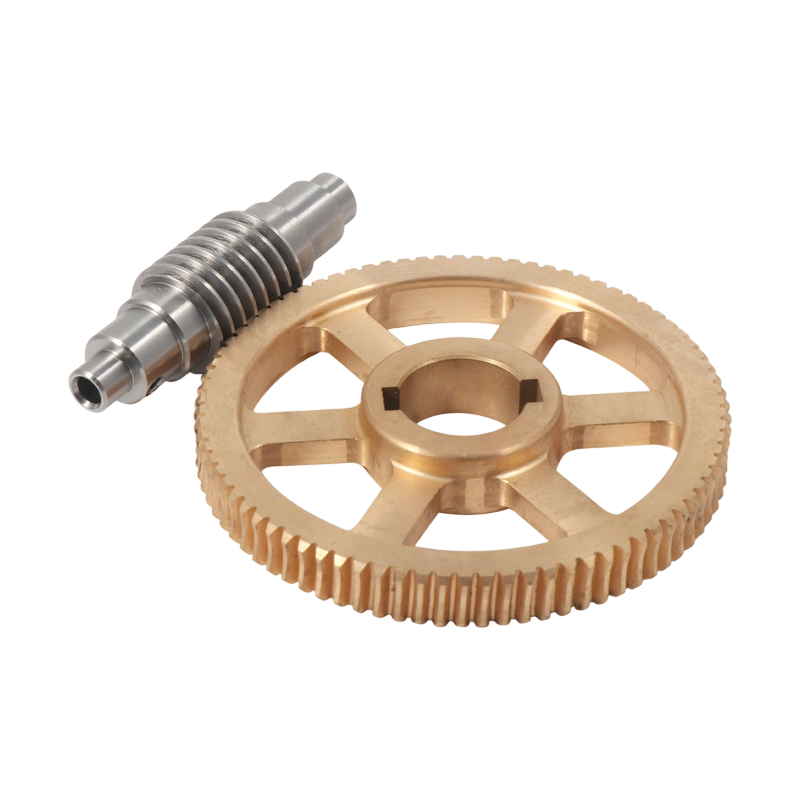
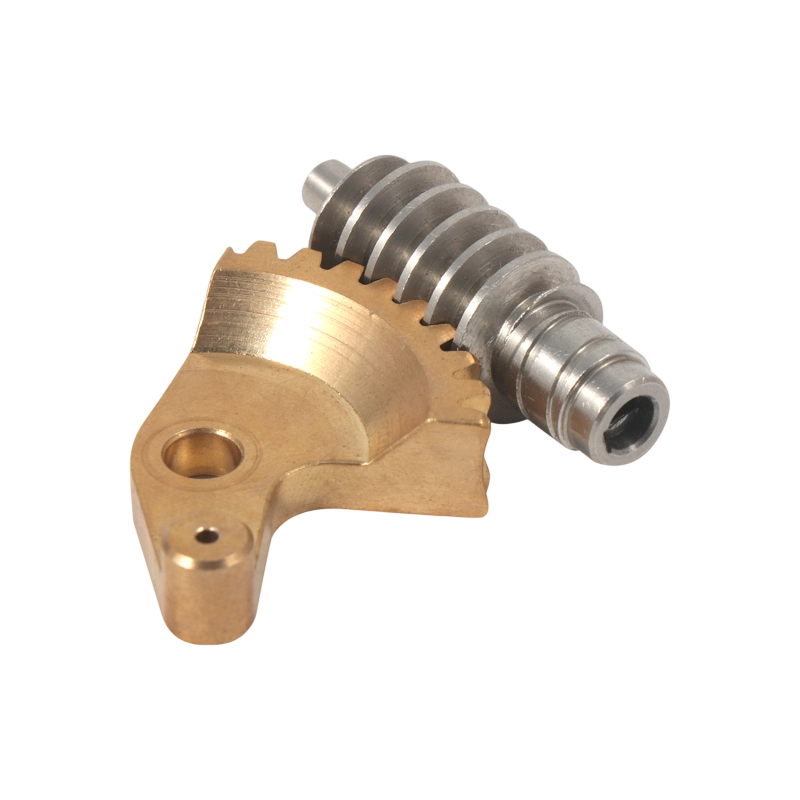
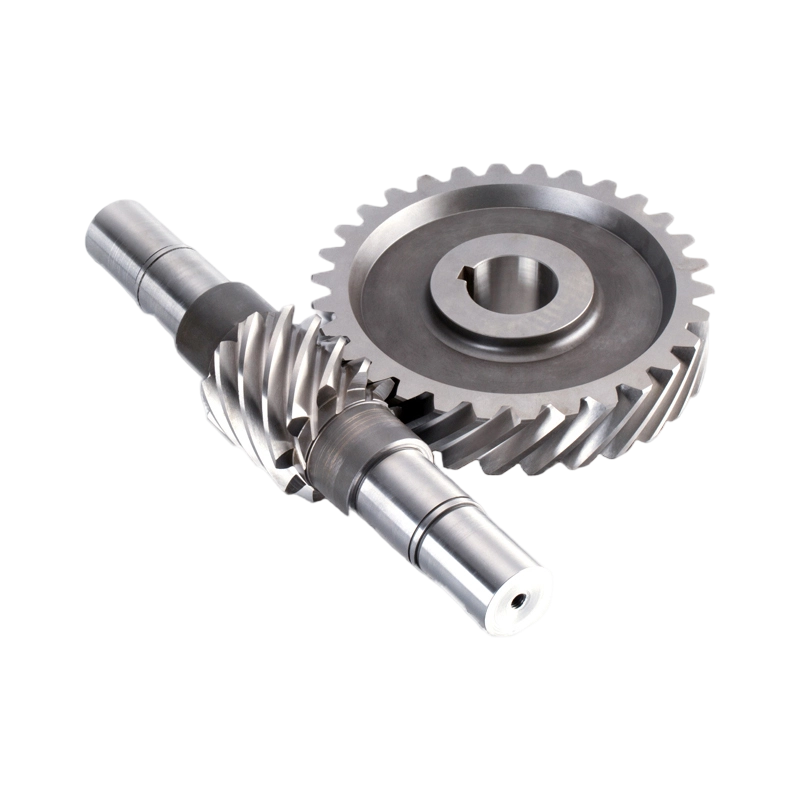
A worm gear set is a common mechanical transmission device widely utilized across various industrial and engineering sectors. It consists of a worm (typically a helical gear) and a worm wheel (a disc featuring gear teeth), enabling efficient speed reduction and directional change.
Key Features
High Reduction Ratio: Worm gear transmissions can achieve substantial speed reduction ratios, making them suitable for applications requiring low-speed, high-torque output.
Self-Locking Function: In certain designs, worm gear sets possess a self-locking characteristic that prevents the load from back-driving (moving in reverse), thereby enhancing system safety.
Compact Design: Due to their unique structural configuration, worm gear transmission systems are typically more compact than other types of gear drives, making them ideal for applications where space is limited.
Application Areas
Mechanical Equipment: Widely employed in various types of mechanical machinery, such as elevators, conveyor systems, and automated equipment.
Automotive Industry: In automotive steering systems and transmissions, worm gears are utilized to facilitate precise control and power transmission.
Home Appliances: Worm gears are also incorporated into numerous household appliances—such as washing machines and power tools—to facilitate power transmission.
Materials and Manufacturing
Worm gear sets are typically manufactured using high-strength materials—such as alloy steel, aluminum alloy, or engineering plastics—to ensure durability and longevity. Manufacturing processes involve precision milling, grinding, and heat treatment to achieve the required levels of precision and performance.
Online Message
-
*
-
-
-
This is an advertising space
Newgear Intelligent Transmission (Guangdong) Co., Ltd., a high-tech enterprise specializing in precision transmission


