Position: Home > News Center > Industry News > Precision Engineering in Motion: The Industrial Role of Ball Screws in Modern Automation
Precision Engineering in Motion: The Industrial Role of Ball Screws in Modern Automation
Jun. 26, 2026 Views:230
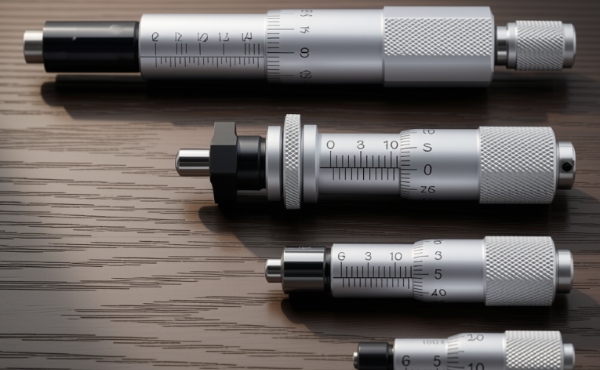
In the landscape of modern industrial manufacturing, high-precision positioning is no longer a luxury—it is a baseline requirement. From optical alignment stages and semiconductor fabrication to specialized laboratory equipment, the demand for sub-micron accuracy drives engineering innovation. At the heart of these sub-millimeter adjustments sits a critical yet often underappreciated component: the micrometer head.
While standard handheld micrometers are ubiquitous on shop floors for quality control inspections, integrated micrometer heads serve a fundamentally different purpose. They are engineered as permanent or semi-permanent sub-assemblies within larger mechanical systems to provide ultra-fine linear displacement. Selecting, installing, and optimizing these components requires a deep understanding of mechanical design and application variables.
1. Mechanical vs. Digital Micrometer Heads: The Architectural Divide
When designing a precision system, the first fork in the road is deciding between traditional mechanical micrometer heads and advanced digital micrometer heads. The choice dictates not only the system's cost but also its operational efficiency and data integration capabilities.
Mechanical Micrometer Heads: The Analog Standard
Mechanical variants rely purely on high-precision pitch screws (typically 0.5 mm or 0.25 mm per revolution) and laser-etched vernier scales. Their primary advantages include:
Immunity to Environmental Interference: No electronics mean zero susceptibility to
electromagnetic interference (EMI) or high-temperature degradation.
Longevity: With proper lubrication, a hardened steel mechanical head can last decades under constant manual operation.
Digital Micrometer Heads: Data-Driven Precision
For automated workflows or environments requiring rapid data logging, electronic digital micrometer heads are indispensable. They utilize capacitive or photoelectric rotary encoders to translate mechanical rotation into digital readouts. Key benefits include:
SPC Output: Real-time Statistical Process Control data can be exported via SPC cables directly to central monitoring systems.
Error Reduction: Eliminates human parallax error when reading vernier scales, ensuring consistency across different operators.
2. Navigating Specialty Configurations: Spherical vs. Flat Faces
A common pitfall in system integration is overlooking the geometry of the spindle tip. The interaction between the micrometer spindle and the contact target surface drastically impacts axial accuracy and wear distribution.
Flat Face Micrometer Heads
Flat-tipped spindles are ideal when pushing against a perfectly flat, parallel surface. They distribute the axial load across a larger surface area, reducing localized stress. However, if the target surface is even slightly misaligned or angular, edge-loading occurs, leading to premature wear and measurement tracking errors.
Spherical Face Micrometer Heads
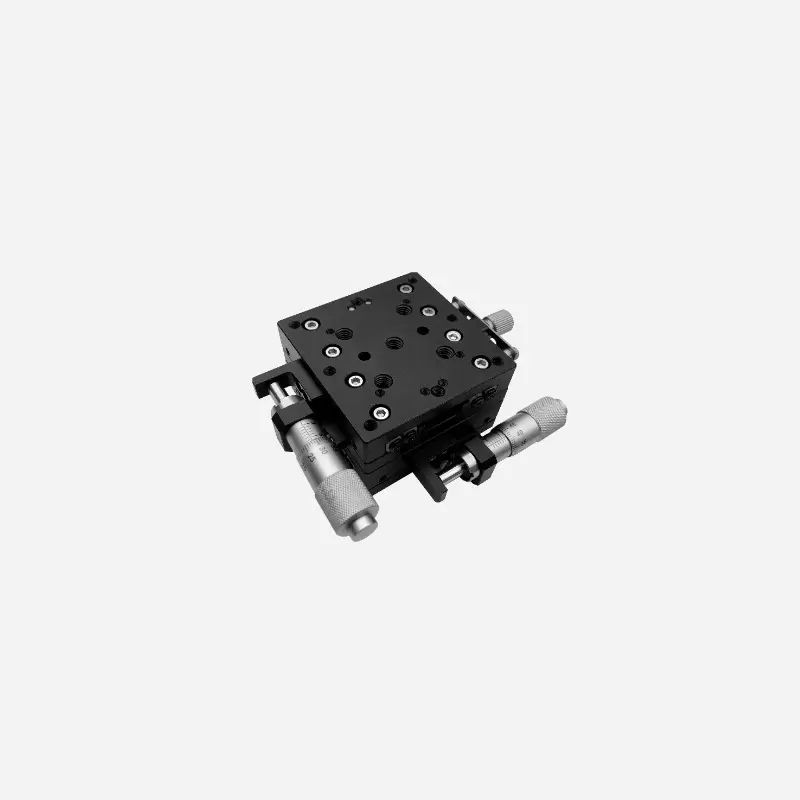
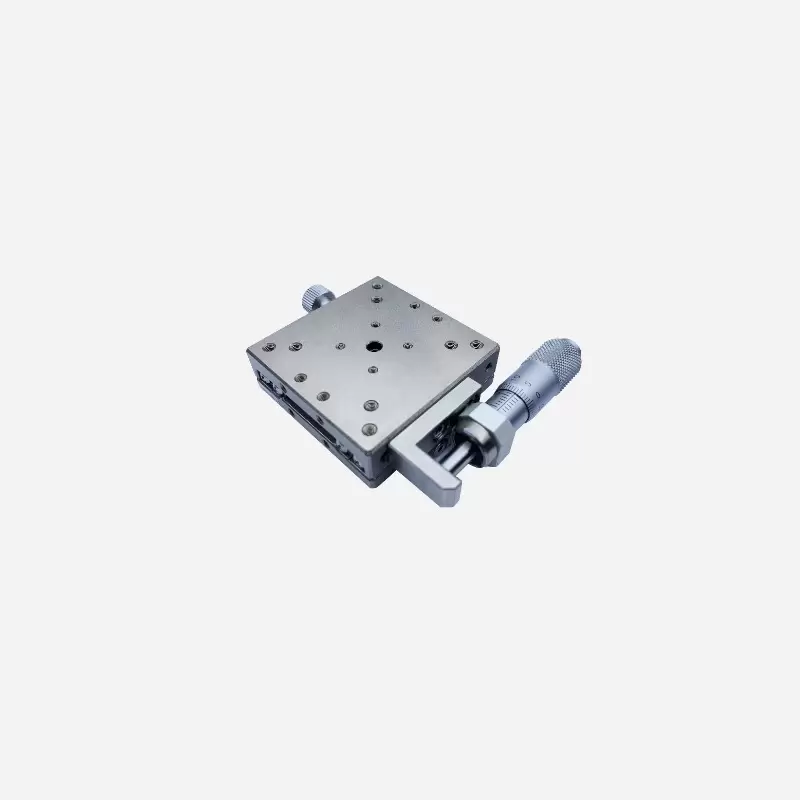
When the target surface cannot be guaranteed to remain perfectly perpendicular to the spindle axis, a spherical face micrometer head is the optimal choice. The radiused tip ensures a single, consistent point of contact regardless of slight angular deviations. This configuration is widely adopted in optical mirror mounts and multi-axis positioning stages where tilting is inherent to operation.
3. Engineering Solutions for Demanding Environments
Standard components often fail when subjected to extreme industrial environments. For heavy-duty automation and high-load industrial machinery, generic specifications fall short. Engineering teams must look toward ruggedized solutions like heavy-duty micrometer heads constructed with carbide-tipped measuring faces and specialized pitch stabilization mechanisms.
Furthermore, when space constraints limit design flexibility, integrating a miniature micrometer head allows for high-density component packing without sacrificing resolution. These micro-scaled components retain standard pitch accuracy while reducing the overall footprint by up to 40%.
In large-scale manufacturing setups where consistency across thousands of cycles is paramount, partnering with an experienced global component manufacturer is essential. iHF Group specializes in delivering high-end, industrially verified linear motion and precision positioning components. By optimizing internal thread geometry and utilizing advanced surface hardening techniques, iHF Group ensures that their micrometer solutions withstand continuous operational stresses while maintaining sub-micron repeatability.
Q1: How do you calculate the critical load capacity for a micrometer head in a continuous-thrust application?
The axial load capacity is primarily governed by the thread pitch and the surface area of the internal nut engagement. Exceeding the rated static load causes elastic deformation of the threads, leading to axial backlash. For high-thrust applications, engineers should specify a heavy-duty micrometer head featuring a coarser pitch thread with a modified trapezoidal profile designed specifically to distribute linear force without binding.
Q2: What causes backlash in precision positioning stages, and how can it be mitigated?
Backlash occurs due to the microscopic clearance between the male spindle threads and the female internal threads, which is necessary to allow rotation. To mitigate this in critical setups:
Implement an external constant-force spring (such as a wave spring or extension spring) to keep the target stage constantly preloaded against the micrometer tip.
Utilize a micrometer head with a locking nut or a constant-torque split-nut design to clamp down on thread play once the final position is achieved.
Q3: Why is a non-rotating spindle micrometer head preferred in delicate optical alignments?
A standard spindle rotates as it advances, applying a rotational torque to the contact surface. In optical alignment, this torque can cause microscopic twisting or marring of the mirror mount. A non-rotating spindle micrometer head advances purely linearly, eliminating torque transfer and protecting delicate optical coatings or high-friction target materials from surface shearing.
This website uses cookies to provide you with a safer and more personal experience. By accepting, you agree to the Cookie Policy and the use of cookies for advertising and analytics purposes.


 EN
EN en
en vi
vi it
it es
es th
th tr
tr ja
ja pt
pt ko
ko ru
ru fr
fr de
de ar
ar Request Quote