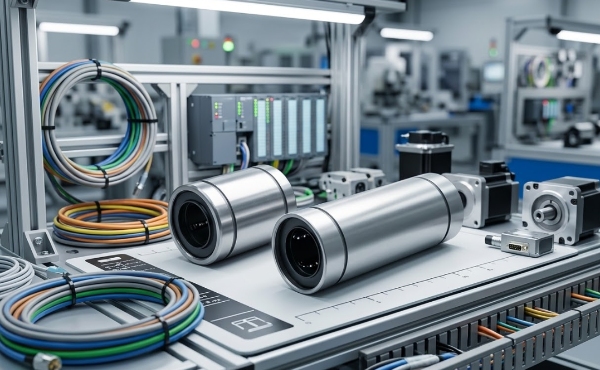
In modern mechanical and automation systems, performance is rarely limited by motors alone. Instead, it is the integrity of power transmission between rotating components that defines operational stability, precision, and service life. Among these components, Stainless Steel Motor Shaft Couplings play a critical but often underestimated role.
Whether in CNC machinery, industrial automation, robotics, energy equipment, or precision instrumentation, shaft couplings must transmit torque accurately while compensating for misalignment, vibration, and thermal expansion. Stainless steel couplings, in particular, are valued for their strength, corrosion resistance, and long-term dimensional stability—making them indispensable in demanding industrial environments.
As a transmission technology specialist, iHF Group delivers stainless steel motor shaft couplings engineered for precision, durability, and consistent performance across a wide range of applications.
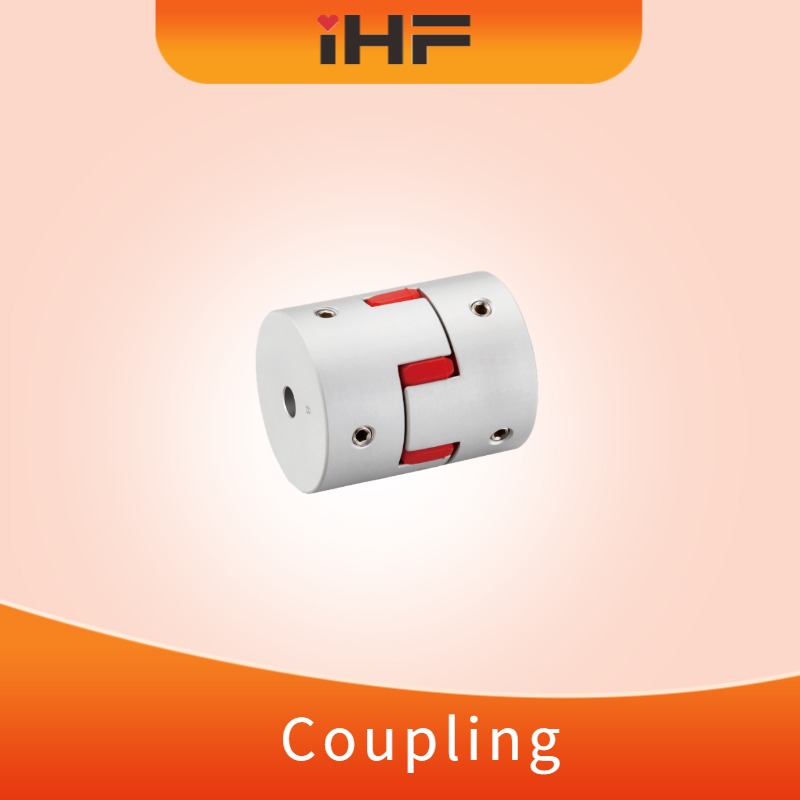
1. What Are Stainless Steel Motor Shaft Couplings
Motor shaft couplings are mechanical devices used to connect a motor shaft to a driven shaft, enabling torque transmission while accommodating certain mechanical deviations.
When manufactured from stainless steel, these couplings offer:
High tensile and torsional strength
Excellent corrosion and chemical resistance
Superior fatigue life
Stable performance in high-temperature or high-humidity conditions
Compared with aluminum or carbon steel alternatives, stainless steel motor shaft couplings are better suited for harsh environments and long-duty cycles where reliability is critical.
2. Why Stainless Steel Matters in Shaft Coupling Design
Material selection directly affects coupling performance. Stainless steel provides a balanced combination of mechanical and environmental advantages.
Mechanical Strength and Torque Capacity
Stainless steel couplings can handle higher torque loads without permanent deformation, making them ideal for heavy-duty and high-speed systems.
Corrosion Resistance
In applications involving moisture, chemicals, food processing, or outdoor exposure, stainless steel prevents rust-related failure and reduces maintenance frequency.
Dimensional Stability
Stainless steel maintains consistent dimensions under thermal variation, which is essential for precision motion control and alignment-sensitive systems.
iHF Group selects stainless steel grades based on application demands, ensuring optimal performance under real operating conditions.
3. Common Types of Stainless Steel Motor Shaft Couplings
Different coupling designs address different mechanical challenges. Understanding these types helps engineers select the right solution.
Rigid Couplings
Designed for perfectly aligned shafts, rigid couplings provide zero backlash and maximum torque transmission but require precise installation.
Flexible Couplings
Flexible stainless steel couplings accommodate angular, parallel, and axial misalignment while reducing vibration and shock loads.
Bellows Couplings
These couplings offer high torsional rigidity with excellent misalignment compensation, widely used in servo motors and precision automation.
With a comprehensive product portfolio, iHF Group supports diverse coupling configurations to match system-specific requirements.
4. Key Performance Parameters Engineers Must Consider
Selecting the correct stainless steel motor shaft coupling requires evaluating more than just shaft diameter.
Critical selection factors include:
Rated and peak torque
Maximum rotational speed
Allowable misalignment (angular, parallel, axial)
Torsional stiffness and backlash
Environmental exposure (temperature, chemicals, moisture)
Ignoring these parameters can lead to premature wear, vibration, or system inefficiency. Professional manufacturers such as iHF Group provide detailed technical data to support accurate selection.
5. Applications Across Industrial Sectors
Stainless steel motor shaft couplings are used wherever reliability and precision are non-negotiable.
Typical application areas include:
CNC machine tools
Servo-driven automation systems
Robotics and motion platforms
Packaging and conveyor equipment
Food, pharmaceutical, and chemical processing machinery
Renewable energy and power transmission systems
In these applications, coupling failure often leads to costly downtime. This is why many OEMs specify stainless steel couplings as standard components.
6. Manufacturing Precision and Quality Control
The performance of a shaft coupling depends heavily on manufacturing accuracy. Even minor dimensional deviations can result in imbalance or misalignment.
High-quality manufacturers implement:
iHF Group integrates these quality processes into its transmission component manufacturing, ensuring each stainless steel motor shaft coupling meets industrial-grade performance expectations.
Conclusion
Stainless Steel Motor Shaft Couplings are fundamental to reliable power transmission, precision motion control, and system longevity. Their strength, durability, and environmental resistance make them indispensable across modern industrial applications.
By delivering engineered coupling solutions backed by manufacturing expertise and technical support, iHF Group continues to help OEMs and industrial users achieve higher performance standards in mechanical transmission systems.


 EN
EN en
en vi
vi it
it es
es th
th tr
tr ja
ja pt
pt ko
ko ru
ru fr
fr de
de ar
ar Request Quote