Position: Home > News Center > Industry News > Next-Generation Hollow Rotary Actuator Design for High-Speed Indexing Applications
Next-Generation Hollow Rotary Actuator Design for High-Speed Indexing Applications
Jun. 02, 2026 Views:348
As industrial automation advances toward higher precision, faster cycle times, and more compact system architectures, traditional rotary indexing mechanisms are increasingly being replaced by integrated servo-based solutions. Among these, the Hollow Rotary Actuator has emerged as a critical enabling component for next-generation motion systems.
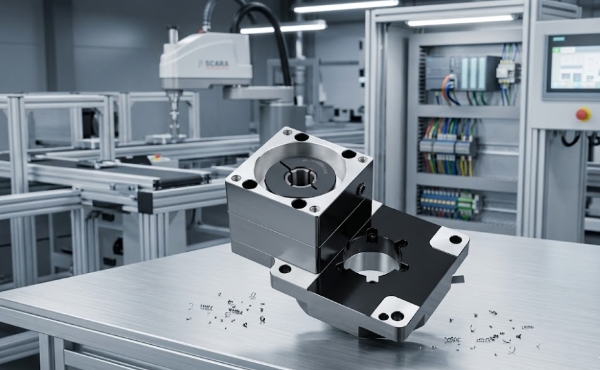
Unlike conventional rotary tables that rely on external couplings or complex mechanical transmissions, a hollow rotary actuator features a central through-hole design that allows cables, air lines, optical fibers, or shafts to pass directly through the rotational axis. This structural innovation dramatically simplifies system integration while improving positional accuracy and mechanical efficiency.
iHF Group has been actively developing and refining hollow shaft rotary actuator technologies to meet the increasing demands of robotics, semiconductor manufacturing, and precision assembly industries.
Understanding Hollow Rotary Actuator Technology
A Hollow Rotary Actuator is a compact electromechanical device that integrates a servo motor, precision bearing system, and direct-drive rotary stage into a single modular unit.
Common long-tail keyword variations include:
high precision hollow rotary actuator for robotic arms
direct drive hollow shaft rotary actuator for automation systems
compact hollow rotary actuator with through-hole design
servo-driven hollow rotary actuator for semiconductor equipment
hollow rotary actuator for cable routing robotic joints
industrial hollow rotary actuator with high torque density
These variations reflect real-world engineering requirements where space efficiency, torque output, and integration flexibility are critical.
Core Structural Advantages of Hollow Rotary Actuators
Through-Hole Architecture for System Integration
The defining feature of a hollow rotary actuator is its central bore, which enables:
Direct routing of electrical cables
Pneumatic and hydraulic line passage
Optical fiber integration for vision systems
Sensor wiring without external drag chains
This significantly reduces mechanical complexity and improves system reliability.
Direct-Drive Motor Configuration
Most advanced hollow rotary actuators utilize direct-drive technology, eliminating:
Gearboxes
Timing belts
Backlash-prone mechanical couplings
The result is:
Zero backlash motion control
Higher positioning repeatability
Reduced maintenance requirements
Improved dynamic response
iHF Group integrates high-torque servo motor designs to ensure stable performance under continuous industrial operation.
High-Rigidity Bearing System
To handle axial, radial, and moment loads simultaneously, hollow rotary actuators rely on precision cross-roller or angular contact bearing structures.
Key benefits include:
High load capacity in compact form
Minimal rotational deflection
Stable accuracy under dynamic conditions
Extended operational lifespan
Key Performance Characteristics
High Torque Density
Hollow rotary actuators deliver significant torque output relative to their size, making them ideal for:
Heavy payload indexing tables
Robotic wrist joints
Multi-axis positioning systems
High Positioning Accuracy
Modern servo control systems enable:
Arc-second level repeatability
Fine angular interpolation
Stable micro-positioning control
This is critical in semiconductor, electronics assembly, and laser processing industries.
Compact Mechanical Footprint
By integrating motor, bearing, and encoder into a single housing, hollow rotary actuators reduce:
System footprint
Installation complexity
Alignment errors
Industrial Applications of Hollow Rotary Actuators
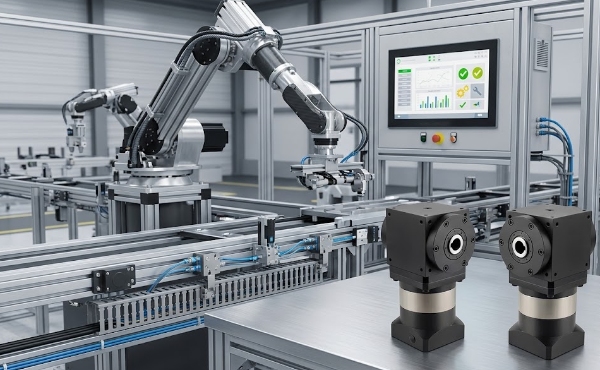
Robotics and Automated Assembly Lines
In robotic systems, hollow rotary actuators are commonly used in:
Robot wrist joints
End-effector rotation modules
Multi-axis collaborative robots (cobots)
The hollow structure allows internal cable routing, eliminating external cable interference during rotation.
Semiconductor Manufacturing Equipment
Precision is critical in semiconductor processes such as:
Wafer alignment
Lithography positioning
Inspection systems
Hollow rotary actuators provide ultra-smooth motion and vibration-free rotation.
Packaging and Printing Machinery
Applications include:
High-speed labeling systems
Rotary filling machines
Continuous printing drum systems
Their high-speed indexing capability ensures consistent throughput.
Medical and Laboratory Automation
Used in:
Diagnostic equipment
Sample handling systems
Automated testing platforms
Low noise and high precision make them suitable for controlled environments.
Engineering Challenges and Design Considerations
Thermal Management
Continuous operation generates heat within compact servo systems. Efficient heat dissipation is essential for maintaining torque stability.
Dynamic Load Control
Sudden acceleration or deceleration requires precise servo tuning to avoid overshoot and vibration.
Cable Routing Stability
Even with a hollow design, internal routing must ensure:
No friction interference
No torsional stress accumulation
Long-term insulation integrity
Encoder Feedback Precision
High-resolution encoders are required to maintain angular accuracy under varying load conditions.
Why Hollow Rotary Actuators Improve System Efficiency
Compared with traditional rotary systems, hollow rotary actuators offer:
Reduced mechanical complexity
Higher system integration density
Lower maintenance costs
Improved motion precision
Faster installation and commissioning
These advantages translate directly into higher productivity and reduced downtime in automated production environments.
视频
iHF Group Engineering Approach
iHF Group focuses on developing high-performance motion control systems that combine precision mechanics with advanced servo technology.
Key design principles include:
Modular actuator architecture
High torque-to-volume ratio optimization
Industrial-grade encoder integration
Rigorous dynamic balancing and testing
Application-specific customization capabilities
By combining mechanical engineering with intelligent motion control, iHF Group ensures that each Hollow Rotary Actuator meets the stringent demands of modern industrial automation.
Conclusion: The Role of Hollow Rotary Actuators in Smart Manufacturing
As manufacturing systems evolve toward greater automation and precision, motion control components must deliver higher performance within smaller physical footprints. The Hollow Rotary Actuator represents a key technological advancement in this direction.
Its ability to combine torque transmission, precision positioning, and internal routing capability makes it an essential component in robotics, semiconductor equipment, and advanced automation systems.
With continuous innovation from companies like iHF Group, hollow rotary actuator technology will continue to drive improvements in efficiency, accuracy, and system integration across global industries.
This website uses cookies to provide you with a safer and more personal experience. By accepting, you agree to the Cookie Policy and the use of cookies for advertising and analytics purposes.


 EN
EN en
en vi
vi it
it es
es th
th tr
tr ja
ja pt
pt ko
ko ru
ru fr
fr de
de ar
ar Request Quote