Position: Home > News Center > Industry News > Precision Engineering with Micrometer Heads for Modern Manufacturing and Metrology
Precision Engineering with Micrometer Heads for Modern Manufacturing and Metrology
May. 14, 2026 Views:116
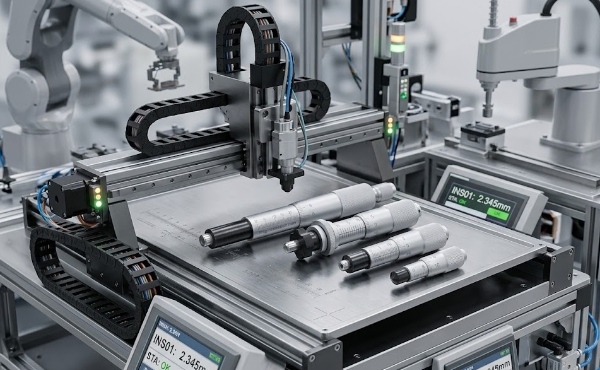
In the realm of ultra-precision engineering, where the difference between success and failure is measured in microns, the micrometer head stands as an indispensable component. Often categorized as a dial micrometer in specific metrology contexts, this instrument is far more than a simple measurement tool. It is a high-precision displacement generator designed to convert rotational motion into linear axial movement with absolute repeatability.
At iHF Group, we understand that a micrometer head is the "mechanical heart" of various high-end systems, from laser alignment stages to semiconductor inspection equipment. Achieving the level of accuracy required in 2026 demands a deep understanding of the screw principle and the mechanical synergy of the components involved.
The Anatomy of Accuracy: Component Synergy
The structural integrity of a precision micrometer head determines its performance under thermal and mechanical stress. A standard high-quality head is composed of several critical elements that work in unison:
● The Fixed Mounting Sleeve and Barrel: These components serve as the datum point for all measurements. The mounting sleeve must be machined to exacting tolerances to ensure that when integrated into a machine or fixture, there is zero axial play.
● The Spindle and Internal Screw: This is where the "screw principle" comes to life. The spindle’s thread pitch is ground with extreme precision, allowing a full rotation of the thimble to translate into a specific, minute linear displacement.
● Thimble and Fine Adjustment Knob: These movable components allow for human-scale interaction with micro-scale movements. The fine adjustment micrometer knob is particularly vital for avoiding over-torqueing, which can lead to measurement errors or damage to delicate workpieces.
iHF Group specializes in the production of these components using stabilized alloys that minimize the coefficient of thermal expansion, ensuring that your axial displacement micrometer remains accurate even in fluctuating factory environments.
Advanced Applications: From Metrology to Automation
While many associate micrometer heads with handheld tools, their primary industrial utility lies in being integrated into larger assemblies. Industrial micrometer head applications have expanded significantly with the rise of photonics and nanotechnology.
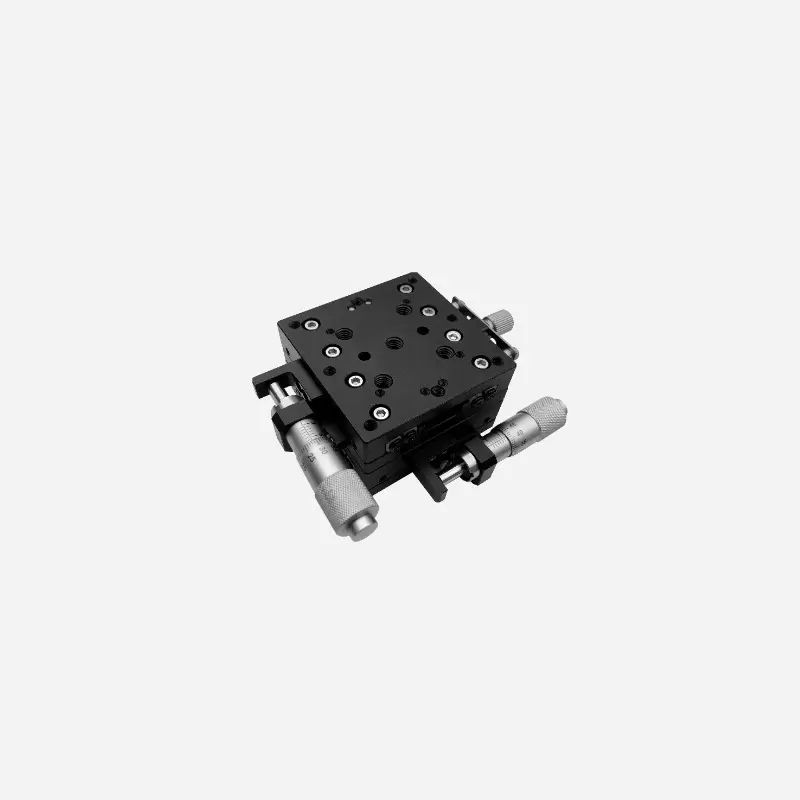
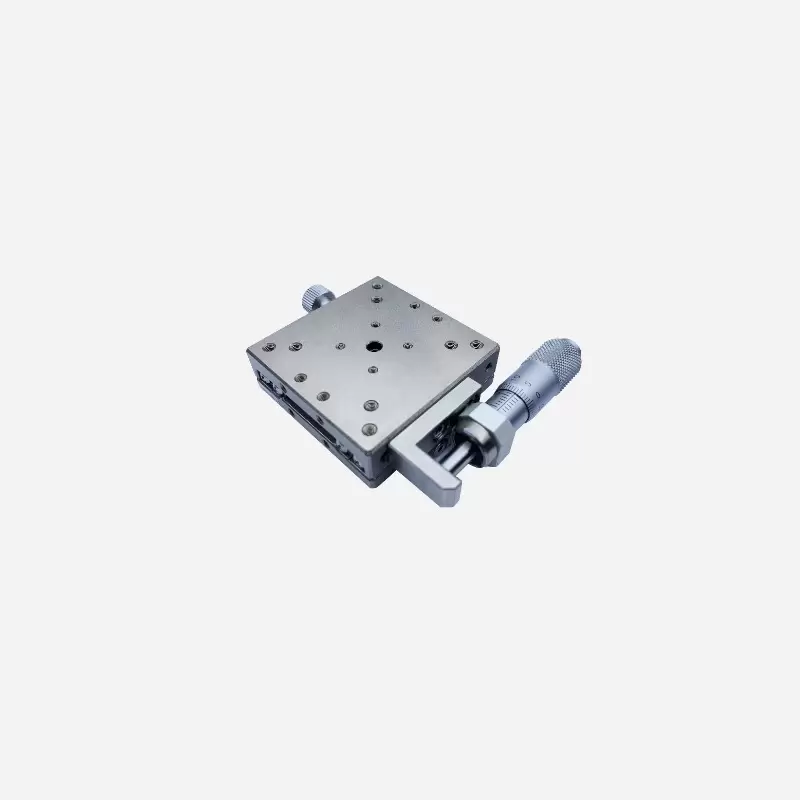
● Optical Positioning Stages: In laser laboratories, micrometer heads are used to adjust mirrors and lenses. The requirement here is for a smooth-motion micrometer head that can provide incremental adjustments without "stick-slip" friction.
● Precision Fixturing and Tooling: Machinists use these heads as adjustable stops or positioning pins in custom jigs. The high load-bearing capacity of iHF Group’s stainless steel micrometer heads ensures that once a position is set, it remains locked against mechanical vibrations.
● Measuring Instruments: Beyond generating movement, they are used to calibrate other sensors. A digital micrometer head integration allows for data logging and real-time monitoring of displacement in automated QC (Quality Control) lines.
The core function of a micrometer head with fine adjustment is to indicate axial displacement accurately. This displacement is a direct result of the relationship between the screw pitch and the graduations on the thimble.
In high-accuracy scenarios, the "Abbe Principle" must be considered—ensuring the measuring task and the measuring instrument are in a single line. iHF Group’s designs prioritize this collinear alignment to eliminate secondary errors (cosine errors) that often plague lower-quality components. When you rotate the thimble, the spindle moves linearly along the axis with a consistency that allows for sub-micron resolution.
Maintenance and Calibration: Ensuring Longevity
To maintain the performance of a heavy-duty micrometer head, regular calibration against traceable standards is required. Because these instruments rely on physical contact and mechanical threads, wear is an eventual factor. However, by utilizing iHF Group’s advanced lubrication coatings and hardened spindle tips, the wear rate is significantly reduced.
Professional users should ensure that the mounting sleeve is never over-tightened into its housing, as this can distort the internal barrel and lead to "tight spots" in the spindle’s travel. Proper integration is the key to unlocking the full potential of high-resolution micrometer heads.
Why iHF Group is the Industry Benchmark
Selecting a micrometer head is not merely about choosing a range; it is about choosing a partner in precision. iHF Group integrates decades of mechanical expertise into every spindle and barrel we produce. Our products are designed for engineers who refuse to compromise on accuracy, offering a blend of traditional mechanical reliability and modern material science.
Whether you are designing a custom laboratory stage or upgrading a production line, our universal micrometer heads provide the stability and precision needed to push the boundaries of what is possible in your industry.
This website uses cookies to provide you with a safer and more personal experience. By accepting, you agree to the Cookie Policy and the use of cookies for advertising and analytics purposes.


 EN
EN en
en vi
vi it
it es
es th
th tr
tr ja
ja pt
pt ko
ko ru
ru fr
fr de
de ar
ar Request Quote