Position: Home > News Center > Industry News > Precision in Motion: How Nylon Cable Drag Chains Enhance Modern Automation Reliability
Precision in Motion: How Nylon Cable Drag Chains Enhance Modern Automation Reliability
Dec. 05, 2025 Views:449
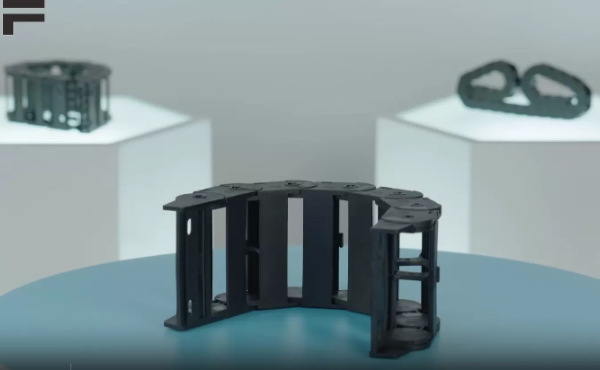
In modern industrial automation, motion systems are becoming progressively faster, smarter, and more compact. As machines accelerate toward higher throughput and precision, the demand for reliable cable protection solutions grows accordingly. Among these solutions, the nylon cable drag chain stands out as a core component that ensures uninterrupted cable guidance and protection across dynamic machine movements.
For companies seeking consistent performance under demanding conditions, high-quality drag chains are no longer an accessory but an essential engineering element. This is where iHF Group, a company deeply experienced in intelligent automation and industrial equipment integration, plays an influential role. Leveraging years of technological expertise, iHF Group helps global manufacturers deploy stable, long-life cable drag chain solutions that support automation systems across their entire lifecycle.
视频
1. Why Nylon Cable Drag Chains Matter in High-Performance Machinery
A cable drag chain, sometimes referred to as an energy chain, guides and protects electrical cables, pneumatic hoses, and fluid lines. However, not all drag chains are created equal. Nylon, due to its chemical stability and mechanical resilience, has become the material of choice for industrial drag chain applications.
Key advantages of nylon drag chains include:
High fatigue resistance for continuous cyclic motion
Excellent tensile strength with lightweight structural characteristics
Self-lubricating properties, reducing wear in long-term operation
Resistance to oils, coolants, and industrial chemicals
Stable performance across a wide temperature range
In automation environments—such as CNC centers, packaging machinery, robotics, and vision inspection systems—nylon drag chains ensure that cables do not bend excessively, twist, abrade, or become entangled. This stability directly translates to longer equipment service life and reduced maintenance downtime.
2. Engineering Requirements for Modern Drag Chain Systems
Today’s automated equipment operates under increasingly complex motion profiles. This places high technical requirements on any nylon cable drag chain:
2.1 Dynamic Load Capacity
A high-speed linear actuator or pick-and-place robot may perform tens of thousands of cycles per day. Drag chains must withstand continuous movement without compromising cable integrity.
2.2 A Precise Bend Radius
Maintaining the correct bending radius protects fiber-optic lines, encoder cables, and servo motor wiring from micro-fractures or transmission loss.
2.3 Modularity and Quick Assembly
Engineers require chains that can be opened, extended, or reorganized easily during equipment upgrades or maintenance.
2.4 Structural Rigidity with Zero Deformation
Heavy-duty systems, particularly in automated packaging and labeling lines, demand chains that will not deform under load or prolonged vibration.
These performance characteristics are integral to modern automation solutions, and high-grade nylon chains deliver the required balance of durability and flexibility.
3. How iHF Group Integrates Nylon Cable Drag Chains into Advanced Automation Systems
As a long-established leader in machine vision inspection, automatic labeling, and intelligent packaging lines, iHF Group understands the importance of robust cable management in large-scale automation projects.
The company takes a full life-cycle approach, managing products from R&D and design to manufacturing, installation, and after-sales services. In practice, nylon cable drag chains play an essential role across multiple iHF Group systems:
3.1 Intelligent Labeling Equipment
High-speed labeling heads require stable cable movement during rapid reciprocation. Nylon drag chains minimize vibration-induced wear and ensure signal integrity for servo-driven labeling components.
3.2 Vision Inspection Modules
Camera systems and sensor arrays rely on uninterrupted data transmission. Proper drag chain layout prevents micro-bending of data cables and eliminates electromagnetic interference resulting from loose wiring.
3.3 Automated Packaging Lines
Large motions in conveyor transitions, sealing stations, and stacking modules require cable solutions capable of resisting chemical exposure, moisture, and repetitive mechanical stress.
3.4 Customized Robotic Integration
From collaborative robots to multi-axis industrial manipulators, iHF Group integrates drag chains designed to handle complex 3D ambulation without cable failure.
Through systematic engineering and real-world experience, the company ensures that every drag chain configuration is optimized for its specific load, speed, and environmental conditions.
4. Technical Parameters to Consider When Selecting a Nylon Cable Drag Chain
To ensure optimal performance, engineers should evaluate multiple technical metrics when choosing a drag chain:
4.1 Internal Height & Width
Allow at least 10–20% extra space for cable movement and cooling.
4.2 Pitch and Link Thickness
Higher pitch values support longer unsupported spans while maintaining rigidity.
4.3 Bending Radius
Typical options range from R28 to R100; selection depends on cable type and machine stroke.
4.4 Noise Level
Low-friction nylon systems significantly reduce noise in high-speed environments.
4.5 Operating Temperature
Industrial-grade nylon chains typically support -40°C to +120°C without loss of elasticity.
4.6 Chemical Resistance
This is critical in food packaging, chemical processing, and metalworking applications.
By evaluating these parameters, users can ensure optimal interaction between cables and drag chains throughout the machine’s operational lifespan.
Conclusion
A nylon cable drag chain is more than a mechanical accessory—it is a critical component that protects the integrity, precision, and longevity of modern automation systems. For manufacturing environments that rely on consistent performance, selecting a professional-grade solution is essential.
With deep roots in intelligent packaging, machine vision, and automation engineering, iHF Group integrates advanced drag chain systems that ensure cables operate smoothly under high dynamic loads. Their commitment to quality and system-level reliability helps global companies achieve stable, efficient, and long-lasting automation performance.
This website uses cookies to provide you with a safer and more personal experience. By accepting, you agree to the Cookie Policy and the use of cookies for advertising and analytics purposes.


 EN
EN en
en vi
vi it
it es
es th
th tr
tr ja
ja pt
pt ko
ko ru
ru fr
fr de
de ar
ar Request Quote