Position: Home > News Center > Industry News > Eliminating Torsional Backlash: A Deep Dive into High-Precision Custom Transmission Splines
Eliminating Torsional Backlash: A Deep Dive into High-Precision Custom Transmission Splines
May. 29, 2026 Views:255
In modern heavy-duty power distribution systems, high-torque industrial machinery, and automotive performance drivetrains, transferring rotational kinetic energy smoothly is a critical engineering challenge. Delivering raw horsepower from a prime mover to a downstream geartrain requires more than simple connection components. It demands an interface capable of handling intense torsional stresses, matching angular velocities precisely, and resisting mechanical wear over millions of load cycles.
Traditional keyed shafts often create structural weaknesses and stress concentrations, which can lead to fatigue fractures under high shock loads. To solve this, advanced mechanical systems use spline profiles to distribute torque uniformly across multiple structural teeth.
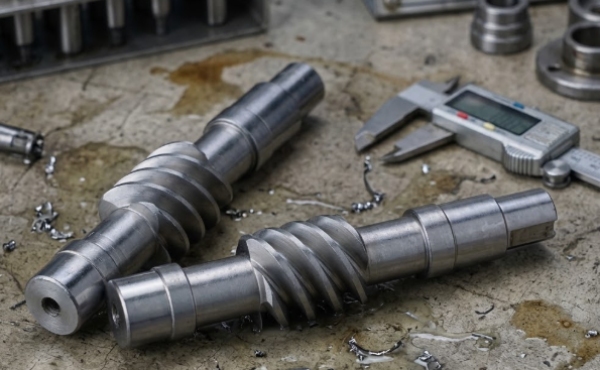
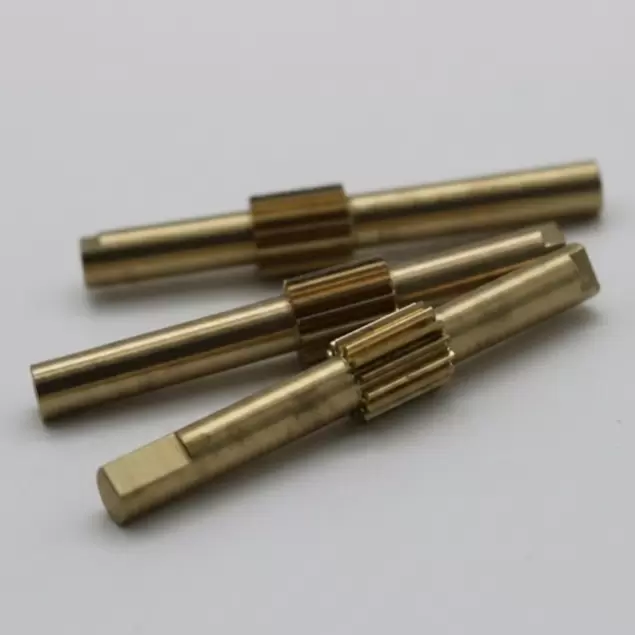
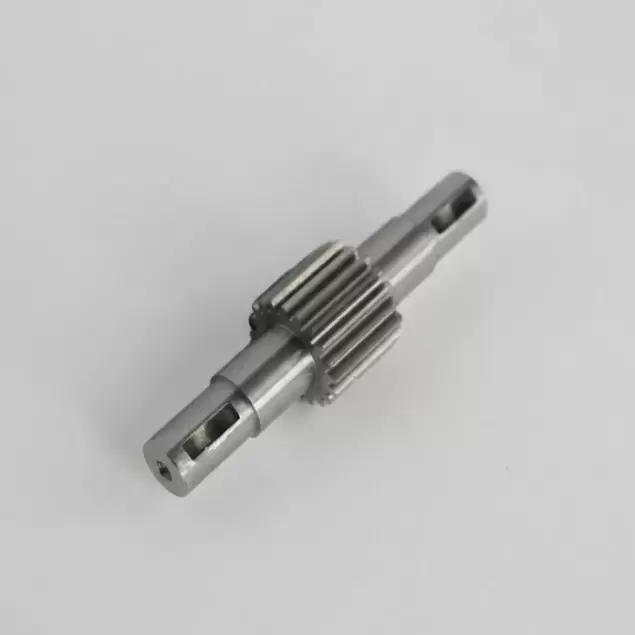
For engineers optimizing critical powertrains, specifying a premium Custom Driver Transmission Spline Gear Shaft is essential for maintaining mechanical reliability. As a premier global authority in precision gear manufacturing, the IHF Manufacturer of Custom Driver Transmission Spline Gear Shaft solutions—delivered globally by iHF Group—provides the strict tolerances, specialized geometry, and advanced metallurgy required to secure modern power transfer networks.
The Geometry of Cohesion: Spline Profiles and Mechanical Engagement
The primary function of a heavy-duty driver transmission spline shaft is to allow longitudinal axial movement while maintaining strict rotational sync with its mating female component. Achieving this balance depends heavily on the chosen spline tooth profile geometry.
iHF Group manufactures custom power components using two main tooth profiles, each tailored tospecific industrial loads:
1. Involute Spline Architecture
Featuring a curved tooth profile similar to standard gear teeth, involute splines are the preferredconfiguration for high-vibration automotive and aerospace drivetrains. The curved design yields anatural centering action under load, ensuring optimal concentricity. By utilizing pressure angles of 30°, 37.5°, or 45°, the stress lines are distributed evenly across the base of the tooth, minimizingstress concentration points and maximizing fatigue life.
For heavy machinery and slider-gear setups in traditional industrial gearboxes, straight-sided splinesprovide deep, flat-walled contact surfaces. This layout delivers high structural stability forcomponents that slide frequently along the axis under lighter torque loads, preventing mechanicalbinding.
Metallurgical Integrity: Overcoming Torsional Fatigue and Micro-Fretting
Sourcing a precision automotive transmission spline gear shaft requires looking beyond basic dimensional blueprints to analyze the underlying material science. Spline teeth are vulnerable to a failure mode known as fretting corrosion—microscopic sliding movements caused by torsional vibration that wear down surface metal and lead to premature loose fits.
To prevent this surface degradation, iHF Group utilizes premium steel alloys, including AISI 4140, 4340, and 8620. Our internal heat-treatment workflows are carefully optimized for the operational environment of each component:
● Carburizing and Case Hardening: For gears facing heavy friction, carbon is diffused into the outer steel layers. This produces a hard, wear-resistant outer skin (typically HRC 58-62) while keeping a ductile, shock-absorbing inner core.
● Precision Nitriding: For intricate, thin-walled spline shafts where high heat could cause geometric warping, low-temperature nitriding creates a tough nitride layer. This maximizes surface fatigue resistance with zero dimensional distortion.
Technical Excellence: Sourcing Custom Splines from iHF Group
For Tier-1 automotive suppliers and OEM equipment manufacturers, choosing a custom industrial gear shaft supplier means investing in repeatable manufacturing quality. Modern high-speed servomotors and tight gearbox housings leave no room for minor spacing variations or pitch circle eccentricities.
iHF Group utilizes advanced multi-axis CNC spline hobbing, shaping, and precision cold-rollingmachinery. Cold-rolled splines provide excellent grain flow alignment along the tooth contour,increasing structural load capacity by up to 30% compared to standard cut splines.
Every batch is verified using high-precision Coordinate Measuring Machines (CMM) and non-destructive magnetic particle testing, ensuring that every component delivered to your assemblyfloor is free from sub-surface flaws and fully ready to perform.
视频
Technical Deep-Dive: Frequently Asked Questions
Q1: Why are involute splines preferred over straight-sided splines in automotive drivetrains?
A: Involute splines feature a curved base that naturally centers the shaft under load, reducing vibration at high RPMs. They also have a larger cross-section at the root of the tooth, which eliminates the sharp corners found in straight splines. This design prevents stress concentrations and provides significantly higher torsional fatigue strength.
Q2: How does iHF Group prevent dimensional warping during the case-hardening process?
A: We use advanced vacuum gas-quenching furnaces and precision press-quenching fixtures to control heat distribution. For parts with tight geometric tolerances, we leave a small grinding allowance on the teeth, performing final high-precision CNC spline grinding after heat treatment to correct any micro-warping.
Q3: Can iHF Group reverse-engineer a custom spline shaft from a worn or broken field sample?
A: Yes. Using specialized optical scanners and CMM diagnostics, our engineering team can determine the original pitch, pressure angle, and module profile of a worn part. We analyze the base metal to select a matching or superior alloy, delivering a replacement part that often outperforms the original OEM component.
This website uses cookies to provide you with a safer and more personal experience. By accepting, you agree to the Cookie Policy and the use of cookies for advertising and analytics purposes.


 EN
EN en
en vi
vi it
it es
es th
th tr
tr ja
ja pt
pt ko
ko ru
ru fr
fr de
de ar
ar Request Quote