In the architecture of modern automation, CNC machining, semiconductor fabrication, and high-speed pick-and-place robotics, the structural integrity of linear motion axes dictates the performance ceiling of the entire system. At the core of these multi-axis systems sits the linear guide—a critical component engineered to support heavy payloads, minimize frictional coefficients, and maintain strict sub-micron positional repeatability under aggressive acceleration profiles.
Selecting the ideal linear bearing system requires balancing geometric constraints, structural loads, environmental conditions, and cost requirements. For mechanical design engineers, optimizing an axis is not about finding a generic component; it is about configuring a precise mechanical assembly that eliminates deflection, controls stick-slip phenomena, and extends mechanical operating life.
1. Geometric Adaptability: Maximizing Travel-to-Payload Ratios
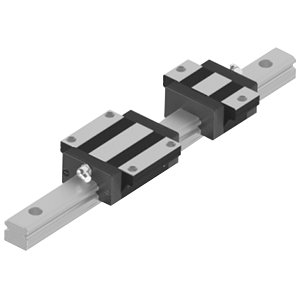
The primary design challenge in multi-axis motion planning is configuring an axis that meets spatial requirements without introducing structural overhangs or unnecessary weight. A highly optimized custom length linear guide rail addresses this challenge by providing structural flexibility across various sizes.
By utilizing rail profiles that can be customized anywhere from 25mm to 2000mm, system designers can tailor their setups to match exact travel requirements, eliminating the need for complex on-site cutting or structural compromises. To complement this dimensional range, these systems support modular configurations, allowing for 1 to 8 slide blocks per individual rail.
For applications with long travel paths and low payloads, a single block configuration reduces friction and dragging torque. Conversely, for high-moment, heavy-load industrial setups, mounting multiple blocks on a single rail distributes radial, reverse-radial, and lateral loads evenly. This multi-block layout keeps localized stresses safely within the material's elastic limits, preventing track indentation and uneven wear.
2. Advanced Metallurgy: Matching Core Materials to Environmental Stressors
Operating environments vary widely across different industries. A linear motion system running inside an ultra-high vacuum (UHV) semiconductor cleanroom face completely different stress factors than one operating on a high-throughput automotive welding line.
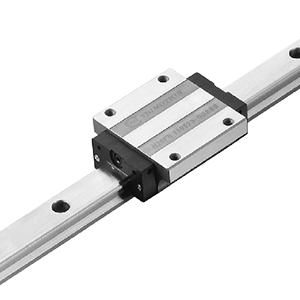
Selecting stainless steel linear guide components prevents oxidation in environments with high humidity or chemical sanitizers, eliminating the risk of surface pitting that can disrupt ball bearing recirculation loops. On the other hand, choosing a high rigidity carbon steel linear rail maximizes structural stiffness under heavy static and dynamic loads. This prevents elastic deformation under heavy moment loads, keeping structural deflection to an absolute minimum during rapid direction changes.
3. Accuracy Grading: Aligning Motion Tolerances with Application Demand
Over-engineering a system by specifying excessive tolerances increases overall project costs, while under-engineering leads to accuracy drift and premature structural failure. To balance cost and performance, modern linear motion systems are structured into two distinct, factory-calibrated accuracy grades.
Standard Grade Systems
Engineered for cost-effective automation, material handling, packaging machinery, and logistics systems. This grade provides a reliable, low-friction solution where structural parallelism and smooth movement are valued over sub-micron absolute precision.
Precision Grade Systems
Specially designed for demanding fields like semiconductor handling, laser processing, waferinspection, and coordinate measuring machines (CMM). A precision grade industrial linear guidefeatures strict height and width dimensional tolerances. This geometric consistency limits vertical and horizontal runout during travel, preventingmicro-vibrations and ensuring the exact accuracy needed for high-resolution laser cutting andnanometer-scale electronic component placement.
4. Tribology and Extended Service Life Architecture
The long-term performance of any linear bearing depends on its internal recirculation dynamics and lubrication maintenance. Premium systems engineered by iHF Group
To prevent lubricant loss and keep out airborne contaminants, each slide block is equipped with integrated double-lip end seals, bottom seals, and internal scrapers. The optimized recirculating end caps route the ball bearings smoothly through their return paths, reducing friction, lowering operating noise, and ensuring uniform grease distribution. This internal lubrication system extends maintenance intervals, reduces total cost of ownership (TCO), and ensures consistent, stable operation over millions of linear meters of travel.
Conclusion: Securing Motion Integrity Across Global Industries
In high-performance automation, the overall reliability of a machine depends entirely on the stability of its linear guideways. Choosing low-spec, uncalibrated linear tracks leads to frequent positioning drift, excessive mechanical noise, and costly production downtime.
By partnering with an experienced linear motion manufacturer like iHF Group, procurement teams and system integrators gain access to highly modular, factory-validated linear solutions. Offering customizable rail lengths up to 2000mm, dual material choices (stainless and carbon steel), and specialized precision grading, iHF Group provides the robust mechanical foundation needed to build faster, more accurate, and highly durable automated systems.


 EN
EN en
en vi
vi it
it es
es th
th tr
tr ja
ja pt
pt ko
ko ru
ru fr
fr de
de ar
ar Request Quote