In the precise world of industrial automation, motion is the language of efficiency. Whether you are operating a high-speed CNC router, an intricate 3D printing gantry, or a heavy-duty conveyor assembly, the ability to translate motor rotation into linear or angular motion with zero slip is critical. While belts are the flexible conduits of power, the high-torque timing pulleys are the unyielding command centers that dictate exactly how that power is delivered.
When a pulley experiences premature wear or structural deformation, the ripple effect on your production line is immediate: loss of synchronization, increased vibration, and potential mechanical failure. To meet the rigorous demands of modern manufacturing, engineers are turning to specialized, precision-engineered power transmission components. iHF Group stands at the forefront of this evolution, providing high-performance solutions that ensure every revolution is calculated, consistent, and exceptionally reliable.
1. The Geometry of Performance: Why Profile Accuracy Matters
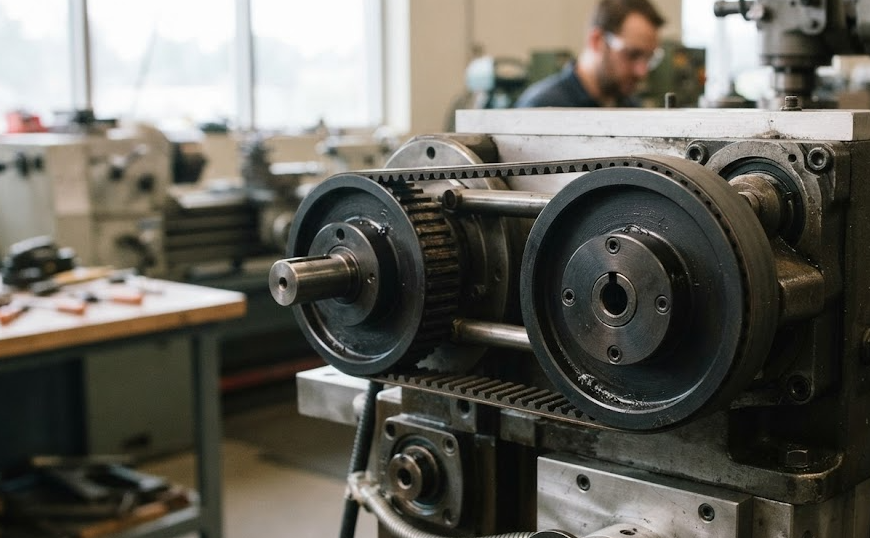
The distinction between a standard pulley and a high-torque synchronous timing pulley lies in the tooth profile geometry. Standard profiles are often prone to "ratcheting"—a catastrophic event where the belt skips over the teeth under high-load conditions.
High-torque designs utilize sophisticated involute or curvilinear tooth profiles that distribute the stress load more evenly across the entire tooth surface. This advanced geometry serves two critical functions:
● Increased Surface Engagement: By maximizing the contact area between the belt tooth and the pulley groove, the design effectively handles higher torque densities without increasing the pulley diameter.
● Reduced Backlash: Precision machining ensures the clearance between the belt tooth and the pulley slot is maintained at an absolute minimum, which is essential for motion control systems requiring high repeatability.
By partnering with iHF Group, engineers gain access to manufacturing processes that hold tolerances in the sub-micron range, ensuring the pulley and belt interface performs as a single, unified mechanical unit.
2. Advanced Metallurgy: Ensuring Structural Rigidity
A high-torque environment is inherently punishing. Sudden acceleration, rapid directional changes, and constant centrifugal force subject the pulley material to intense fatigue cycles. Cheap, cast-aluminum pulleys often crack or warp when pushed to their limits, leading to eccentric rotation and premature belt shredding.
Modern heavy-duty high-torque timing pulleys require materials that offer high stiffness-to-weight ratios:
● Anodized Aluminum Alloys: Ideal for high-speed, low-inertia applications where rapid start-stop cycles are required.
● Hardened Steel and Stainless Steel: The gold standard for high-torque environments where abrasive wear and corrosive exposure are constant threats.
● Surface Hardening: Through processes like hard-coat anodizing or heat treatment, iHF Group ensures that the wear surface of every tooth maintains maximum hardness, preventing the "rounding" effect that plagues lower-quality components.
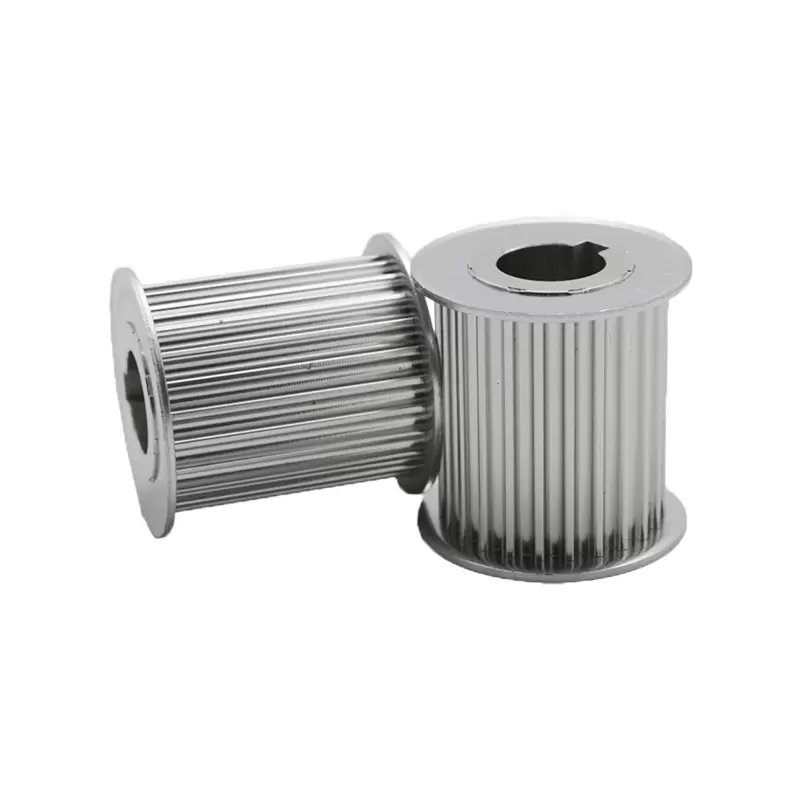
3. Customization: The Core of Engineering Versatility
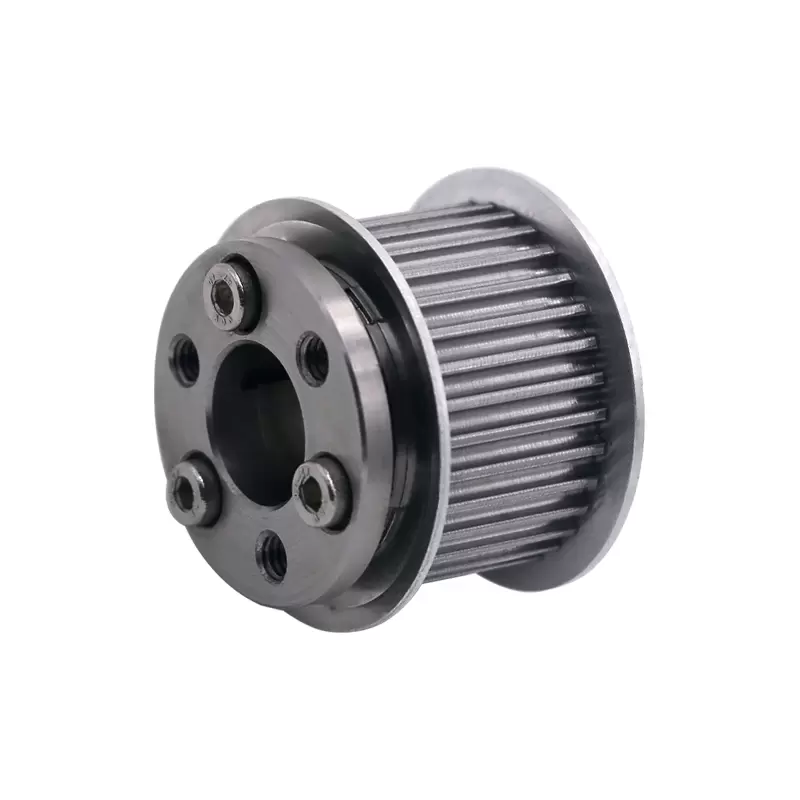
Every motion control system is unique. Off-the-shelf components often force engineers to compromise on their design intent. This is where custom-manufactured timing pulleys become a strategic asset rather than just a part.
Whether you need a specific hub modification (such as tapered bushings for high-concentricity mounting) or a non-standard bore geometry for specialized shafts, customization is the key to optimizing the entire machine architecture. iHF Group provides comprehensive engineering support to adapt these pulleys to:
● High-Vibration Environments: Utilizing balanced pulley assemblies to mitigate harmonic resonance.
● Compact Footprints: Designing low-profile hubs that maximize space efficiency in tight automated enclosures.
● Integrated Solutions: Combining pulleys with unique mounting flanges or specialized coatings for hazardous or cleanroom environments.
4. Maintenance and Longevity: The ROI of Precision
Choosing high-quality timing pulleys is an investment in machine uptime. A well-designed, perfectly aligned pulley system significantly extends the service life of your timing belts. By eliminating the erratic loading caused by poorly machined teeth, you prevent the localized strain that leads to belt snap.
As a leader in the industry, iHF Group emphasizes not just the hardware, but the longevity of the entire system. Implementing our high-precision solutions ensures that maintenance intervals are extended, operational costs are slashed, and your factory floor remains a center of consistent, high-speed output.
5. Frequently Asked Questions (FAQ)
Q: How do I know when to replace my timing pulleys?
A: Inspect for tooth rounding, visible pitting on the pulley grooves, or vibration increases. If the belt shows uneven wear, the pulley tooth geometry may have degraded.
Q: Why does my belt "wander" on the pulley?
A: This is usually a sign of angular misalignment or a pulley that lacks proper flange support. Ensure your pulleys are perfectly parallel and that the shafts are square to each other.
Q: Is it necessary to use a tensioning device with these pulleys?
A: While high-torque pulleys minimize slip, proper belt tension is still required for optimal synchronization. Always refer to the manufacturer's specification for the specific belt-pulley pairing.


 EN
EN en
en vi
vi it
it es
es th
th tr
tr ja
ja pt
pt ko
ko ru
ru fr
fr de
de ar
ar Request Quote