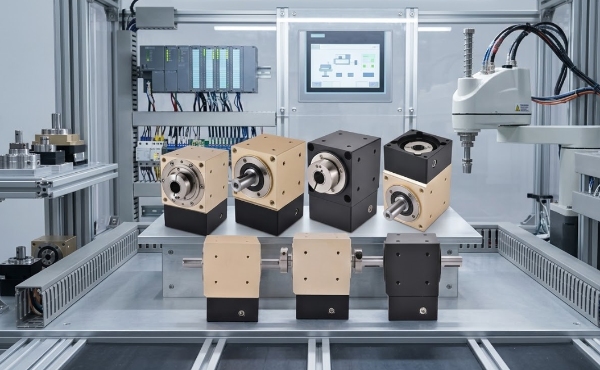
In modern industrial systems, machine layout is rarely linear. Space limitations, structural constraints, and functional integration often require power to be transmitted across perpendicular axes. The industrial right angle gearbox exists precisely to solve this challenge, enabling efficient torque transfer while redirecting rotational motion through a compact and mechanically stable configuration.
Rather than serving as a simple accessory, the right angle gearbox has become a core transmission element in automation equipment, conveyor systems, packaging machinery, and heavy-duty industrial drives. Manufacturers such as iHF Group approach right angle gearbox design as a system-level engineering task, balancing geometry, materials, lubrication, and long-term reliability.
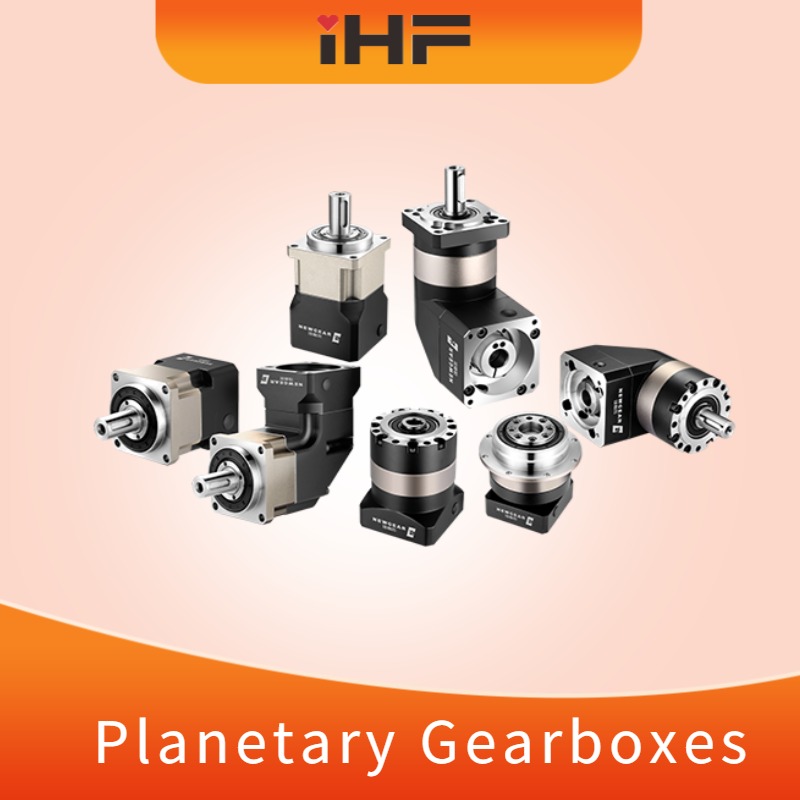
Functional Logic of an Industrial Right Angle Gearbox
At its core, an industrial right angle gearbox changes the direction of power flow while maintaining controlled speed and torque. This redirection must occur without introducing excessive vibration, thermal instability, or mechanical loss.
Unlike inline gear reducers, right angle gearboxes experience more complex force distributions. Shaft orientation, gear meshing angle, and bearing layout all influence operational stability. Properly engineered units ensure smooth motion transfer, predictable load behavior, and consistent output under continuous operation.
Gear Geometry and Transmission Architecture
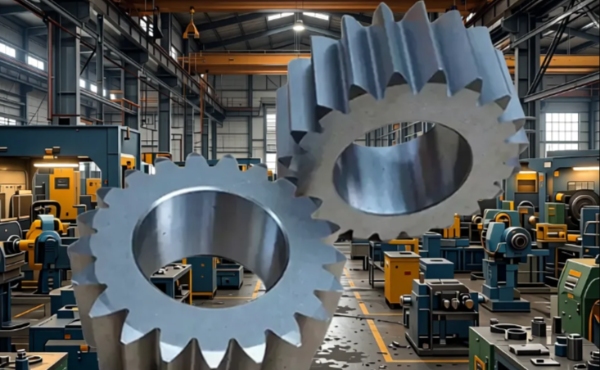
The performance of an industrial right angle gearbox is largely defined by its internal gear configuration. Common architectures include bevel-based systems, spiral bevel arrangements, hypoid designs, and worm gear structures. Each geometry serves a distinct purpose depending on torque demand, noise sensitivity, efficiency requirements, and spatial constraints.
Bevel and spiral bevel systems are often selected for applications requiring high efficiency and stable torque transmission. Worm gear configurations, while typically less efficient, provide compact design advantages and inherent self-locking behavior that can be beneficial in vertical or load-holding applications.
iHF Group evaluates gear geometry not in isolation, but in direct relation to real operating conditions, ensuring the selected architecture aligns with the mechanical and thermal demands of the application.
Structural Rigidity and Load Distribution
An industrial right angle gearbox must withstand combined radial, axial, and torsional forces throughout its service life. Structural rigidity is essential to maintaining gear alignment and preventing uneven load distribution.
Housing design plays a critical role in this process. A rigid gearbox housing minimizes deflection under load, protects internal components, and ensures consistent gear meshing. Bearing placement and shaft support are equally important, as improper load management can lead to premature wear, increased noise, or catastrophic failure.
Material Selection and Surface Engineering
Material choice directly impacts durability, fatigue resistance, and wear performance. High-quality industrial right angle gearboxes typically employ alloy steels with optimized mechanical properties for gears and shafts. These materials are selected for their ability to handle cyclic loads while maintaining dimensional stability.
Heat treatment and surface finishing further enhance performance. Processes such as carburizing, nitriding, or precision grinding improve surface hardness and reduce friction. These treatments extend service life and contribute to stable long-term operation, especially in demanding industrial environments.
Precision Manufacturing and Assembly Integrity
Even the most robust design can fail without precise manufacturing and assembly control. Gear tooth accuracy, shaft concentricity, and bearing preload all affect noise levels, vibration, and load distribution.
Advanced machining processes and strict inspection protocols ensure that internal components meet tight geometric tolerances. During assembly, alignment control and controlled fastening procedures are essential to preserving design intent and ensuring repeatable performance.
Industrial Applications Requiring Right Angle Gearboxes
Industrial right angle gearboxes are widely used across sectors where layout flexibility and torque reliability are critical. Typical applications include material handling systems, automated production lines, packaging equipment, food processing machinery, and industrial robotics.
Each application introduces unique challenges related to cleanliness, environmental exposure, load variation, and operational continuity. A gearbox designed for one environment may not perform reliably in another without proper adaptation.
Conclusion: A Critical Component in Modern Industrial Design
The industrial right angle gearbox is far more than a directional transmission device. It is a precision-engineered solution that enables compact machine layouts, stable torque delivery, and long-term operational reliability.
By combining mechanical design expertise, material science, and manufacturing precision, iHF Group delivers right angle gearbox solutions that meet the evolving demands of modern industry. In an environment where efficiency, durability, and spatial optimization are increasingly important, the right angle gearbox remains a cornerstone of industrial power transmission.


 EN
EN en
en vi
vi it
it es
es th
th tr
tr ja
ja pt
pt ko
ko ru
ru fr
fr de
de ar
ar Request Quote