In high-velocity industrial automation, large-scale CNC machining, and heavy-duty maritime or mining propulsion, the link between the prime mover and the driven shaft is a critical site of mechanical vulnerability. Power transmission is no longer evaluated merely by raw torque transfer. Modern machinery requires a precise balancing act: the mechanical linkage must maintain near-infinite torsional rigidity to preserve angular positioning accuracy while remaining sufficiently compliant to absorb inevitable multi-axial shaft misalignments.
When a drivetrain suffers from parallel, angular, or axial displacements, using a completely rigid coupling forces the system to cope with extreme reaction loads. These forces rapidly destroy support bearings, cause shaft fatigue, and lead to catastrophic system downtime. Implementing a premium high torque flexible coupling is the definitive engineering solution to this issue. Specialized power transmission groups like iHF Group
⚙️ 1. Why High Torque Performance Matters
In industrial systems, torque is the core force behind mechanical motion. Applications such as mining, metallurgy, packaging machinery, and heavy automation often involve:
⚠️ Shock loads and sudden torque spikes
⚠️ Continuous high-load operation
⚠️ Shaft misalignment under dynamic stress
⚠️ Vibration-induced mechanical fatigue
A standard coupling may fail under these conditions due to stress concentration and structural fatigue.
A high torque flexible coupling is engineered to solve these issues by:
✔ Stable torque transmission
Ensures continuous energy transfer even under peak load conditions.
✔ Shock absorption capability
Reduces impact stress on motors, gearboxes, and bearings.
✔ Misalignment compensation
Protects connected machinery from structural deformation.
✔ System longevity improvement
Extends overall equipment service life and reduces downtime.
🏗️ 2. Structural Types of High Torque Flexible Couplings
Different industrial conditions require different coupling structures:
🔩 Elastomeric Flexible Couplings
Use polymer or rubber elements to absorb vibration and torsional shock.
⚙️ Jaw-Type Couplings
Provide reliable torque transmission with controlled flexibility and overload protection.
🛠️ Gear Couplings
Designed for extremely high torque transmission in heavy-duty applications.
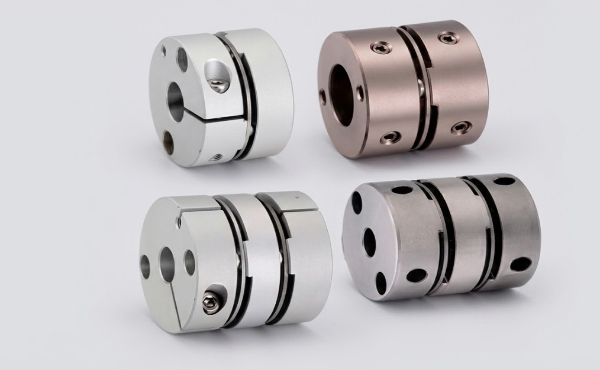
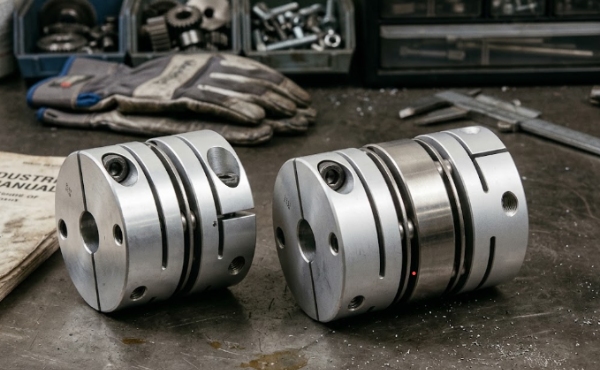
🧩 Disc Couplings
Offer high torsional stiffness with precision misalignment compensation.
Each type is selected based on torque demand, operating speed, and environmental conditions.
🏭 3. Industrial Applications
The high torque flexible coupling is widely used across industries requiring stable and efficient mechanical transmission:
⛏️ Mining & Heavy Machinery
Crushers
Conveyor systems
Drilling rigs
Excavation equipment
These systems require strong shock resistance and continuous torque stability.
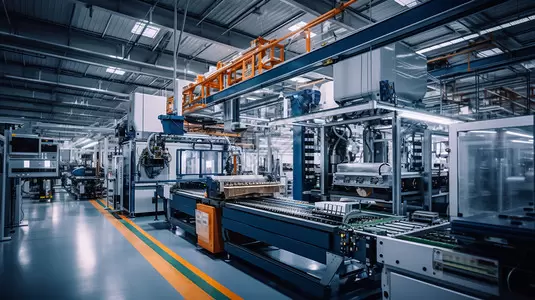
🤖 Industrial Automation
CNC machines
Robotics systems
Automated assembly lines
Precision torque transfer ensures positioning accuracy and operational consistency.
💨 Pumps & Compressor Systems
Centrifugal pumps
Air compressors
Hydraulic drive systems
Couplings reduce vibration and improve mechanical efficiency.
⚡ Energy & Metallurgy Systems
Wind turbines
Rolling mills
Power generation systems
These applications demand continuous high-load torque stability.
🚀 4. Key Performance Advantages
✔ High Load Capacity
Engineered for continuous high-torque industrial operation.
✔ Vibration Reduction
Minimizes mechanical oscillation and system instability.
✔ Maintenance Reduction
Reduces wear on bearings, seals, and shaft components.
✔ Misalignment Flexibility
Supports angular, radial, and axial deviations.
✔ Energy Efficiency Improvement
Improves mechanical alignment and reduces transmission losses.
🧠 5. Engineering Selection Factors
Selecting the right high torque flexible coupling requires careful evaluation:
🔹 Torque rating & safety margin
🔹 Shaft misalignment tolerance
🔹 Operating speed range
🔹 Environmental conditions (heat, dust, corrosion)
🔹 Maintenance requirements & lifecycle cost
Proper selection directly impacts system stability and service life.
🏢 6. iHF Group Engineering Capability
iHF Group specializes in precision mechanical transmission systems, including advanced high torque flexible coupling solutions designed for industrial applications.
Core strengths include:
🧩 High-precision mechanical design optimization
⚙️ Advanced torque transmission engineering
🏭 Stable OEM/ODM production capability
🔩 Material engineering for fatigue resistance
📦 Application-driven customization solutions
By combining engineering design with real industrial requirements, iHF Group ensures reliable performance in high-load environments.
✅ Conclusion
The high torque flexible coupling plays a critical role in modern mechanical transmission systems. It enables stable torque transfer, absorbs vibration, and compensates for misalignment—making it essential for heavy industry, automation, and energy systems.
With engineering-driven solutions from iHF Group, industries can achieve higher efficiency, improved reliability, and longer equipment lifespan in demanding operational environments.


 EN
EN en
en vi
vi it
it es
es th
th tr
tr ja
ja pt
pt ko
ko ru
ru fr
fr de
de ar
ar Request Quote