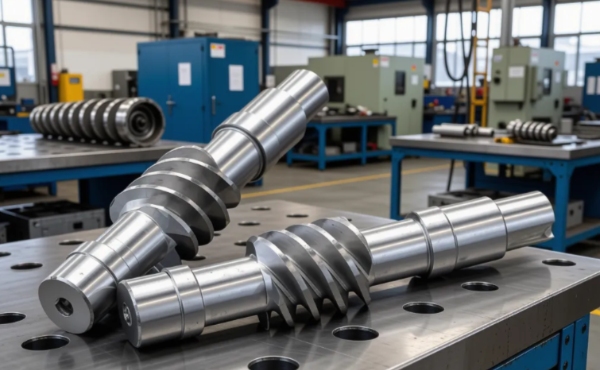
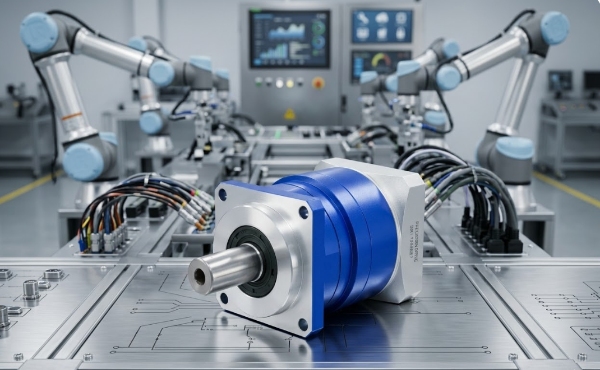
In power transmission systems, gear failure rarely originates from inadequate tooth geometry alone. More frequently, it emerges from material degradation—corrosion pitting that initiates fatigue cracks, galling that destroys tooth profiles under boundary lubrication, or thermal sensitization that compromises structural integrity in elevated-temperature service. When operating environments involve moisture, chemical exposure, food contact, or sterilization cycles, the material specification of the gear becomes as critical as its dimensional accuracy.
Alloy Selection: Matching Metallurgy to Operating Environment
Austenitic Grades: 304, 316, and Their Derivatives
Austenitic stainless steels dominate gear applications requiring general corrosion resistance and non-magnetic properties. Type 304 (UNS S30400) provides adequate resistance in atmospheric, freshwater, and mild chemical environments, with yield strengths of 205 MPa in the annealed condition. For marine, chloride-rich, or aggressive chemical environments, Type 316 (UNS S31600) with 2-3% molybdenum addition delivers superior pitting and crevice corrosion resistance.
The challenge with austenitic grades in gear applications is work hardening response. Cold working during gear cutting and subsequent surface finishing increases hardness and wear resistance but can introduce residual stresses that distort tooth geometry. iHF Group controls this through optimized cutting parameters, intermediate stress-relief thermal cycles, and final dimensional verification after all cold-working operations are complete.
Martensitic and Precipitation-Hardening Grades: 17-4PH and 440C
Where higher strength and wear resistance are required, martensitic stainless steels and precipitation-hardening alloys offer superior mechanical properties. 17-4PH (UNS S17400) achieves yield strengths of 1,100 MPa after precipitation hardening, with corrosion resistance approaching Type 304. This makes it suitable for high-torque applications in corrosive environments—marine propulsion systems, chemical processing agitators, and offshore equipment—where austenitic grades would experience excessive tooth deflection and contact fatigue.
440C (UNS S44004), a high-carbon martensitic grade, provides the highest hardness (58-60 HRC after heat treatment) among standard stainless steels, approaching the wear resistance of tool steels while maintaining corrosion resistance superior to carbon and alloy steels. iHF Group employs 440C for stainless steel straight spur gears in precision instrumentation, medical devices, and aerospace actuators where both wear resistance and environmental protection are mandatory.
Duplex Stainless Steels: 2205 and 2507
For applications combining high mechanical loading with severe corrosion exposure—subsea equipment, desalination plants, and chemical processing—duplex stainless steels offer yield strengths approximately double those of austenitic grades (450-550 MPa) with superior stress corrosion cracking resistance. iHF Group manufactures duplex precision stainless steel spur gears for these extreme-service applications, with full ferrite-austenite phase balance verification through metallographic examination.
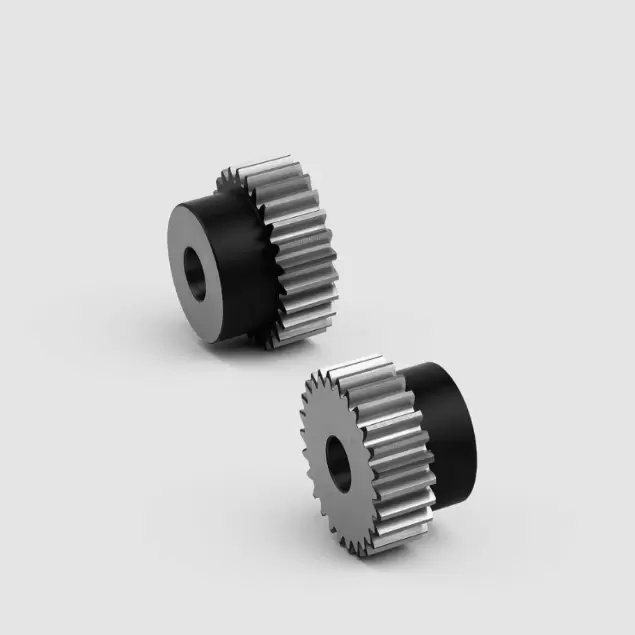
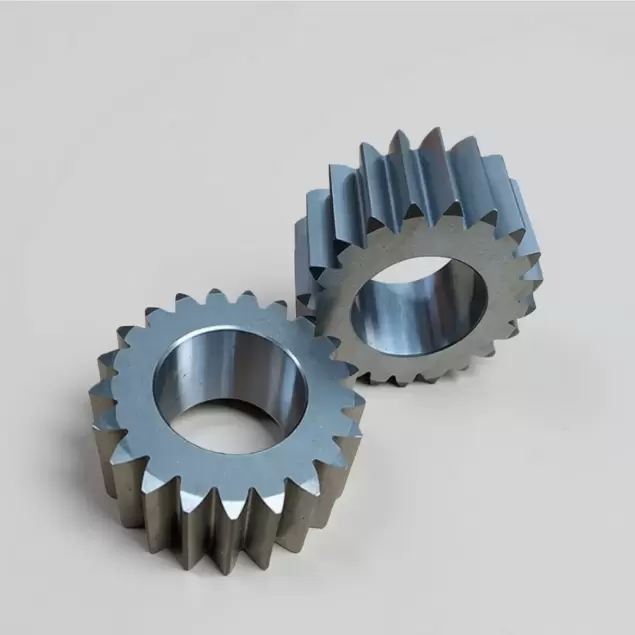
Manufacturing Precision: Achieving AGMA and DIN Quality Levels
Hobbing and Shaping Accuracy
Stainless steel's higher work-hardening rate and lower thermal conductivity compared to carbon steels create distinct machining challenges. Cutting forces are higher, tool wear accelerates, and thermal distortion during machining can compromise final tooth geometry. iHF Group addresses these constraints through:
Carbide or coated high-speed steel cutting tools with geometries optimized for stainless steel chip formation
Cryogenic or high-pressure coolant systems that maintain stable cutting temperatures and prevent workpiece thermal expansion
In-process dimensional monitoring using touch probes and optical measurement systems that verify tooth profile accuracy before work-hardening effects become irreversible
The resulting stainless steel straight spur gears achieve AGMA Quality 8-10 or DIN 3962 Class 6-7 tolerances, with profile deviations under 8 micrometers and pitch errors under 12 micrometers—precision levels that ensure smooth meshing, minimal backlash variation, and extended service life under dynamic loading.
Heat Treatment and Surface Engineering
Austenitic stainless steels cannot be hardened through conventional quench-and-temper cycles. iHF Group employs alternative surface hardening techniques:
● Nitriding: Low-temperature plasma nitriding at 400-450°C creates a diffusion layer 0.1-0.3mm deep with hardness exceeding 1,000 HV, improving wear resistance without compromising corrosion resistance or dimensional stability
● Carburizing: For martensitic grades, controlled atmosphere carburizing increases surface carbon content for enhanced wear resistance while maintaining a tough, ductile core
● PVD coatings: Titanium nitride or diamond-like carbon coatings applied to finished gears provide additional surface hardness and reduced friction coefficients in marginal lubrication conditions
Each surface treatment is validated through microhardness profiling, coating adhesion testing, and corrosion resistance verification to ensure that performance enhancement does not compromise the stainless steel's fundamental environmental protection capability.
Application Engineering: Where Stainless Steel Spur Gears Deliver Differentiated Value
Food and Beverage Processing
Regulatory frameworks including FDA 21 CFR, EU 1935/2004, and 3A Sanitary Standards mandate materials that do not contaminate food contact surfaces and withstand aggressive cleaning protocols. iHF Group's food-grade stainless steel straight spur gears manufactured from 304 or 316L with surface finishes of Ra 0.8 micrometers or smoother eliminate bacterial adhesion sites and resist chloride attack from sanitizing solutions. These gears drive conveyor systems, mixing equipment, and packaging machinery where carbon steel would introduce corrosion products and lubricant contamination risks.
Pharmaceutical and Biotechnology Equipment
FDA and EMA validation requirements for pharmaceutical manufacturing equipment demand materials with documented biocompatibility, extractables profiles, and sterilization compatibility. iHF Group provides stainless steel spur gears with full material certification, surface passivation verification, and electropolishing options that achieve chromium-rich surface layers with enhanced corrosion resistance. These components survive repeated autoclave, gamma irradiation, and chemical sterilization cycles without degradation.
Marine and Offshore Systems
Seawater exposure creates one of the most aggressive corrosion environments for metallic components. iHF Group manufactures marine-grade stainless steel straight spur gears from super-austenitic alloys (904L, 254SMO) or duplex grades for subsea valve actuators, winch drives, and ROV propulsion systems. Full material traceability, pressure testing, and NDT inspection (liquid penetrant, ultrasonic) accompany each component for classification society documentation.
Semiconductor and Cleanroom Manufacturing
Particle generation from gear wear compromises semiconductor wafer yields and pharmaceutical cleanroom classifications. iHF Group's precision stainless steel spur gears for vacuum and cleanroom applications utilize vacuum-melted alloys with ultra-low sulfur and inclusion content, polished to sub-micron surface finishes, and packaged in cleanroom-compatible containers to prevent particulate contamination during installation.
Quality Assurance and Metrological Validation
Dimensional Verification
iHF Group employs coordinate measuring machines (CMM) with gear-specific software modules that verify tooth profile, lead, pitch, and runout against AGMA 2000 or ISO 1328 standards. Statistical process control monitors production batches for dimensional drift, with automatic machine adjustment when trend analysis indicates approaching tolerance limits.
Metallurgical Verification
Each production lot undergoes spectrographic analysis to confirm alloy composition, hardness testing to validate heat treatment response, and metallographic examination to verify grain structure and phase distribution. For critical applications, Charpy impact testing and corrosion testing (salt spray, intergranular corrosion per ASTM A262) provide additional performance validation.
Conclusion
Stainless steel straight spur gears occupy a specialized position in power transmission engineering where environmental protection, regulatory compliance, and mechanical performance converge. The material selection, manufacturing precision, and surface engineering that define these components require expertise distinct from carbon steel gear production.
iHF Group operates as a technical manufacturing partner rather than a commodity supplier, investing in metallurgical processing capabilities, precision machining systems, and application-specific validation protocols that ensure each stainless steel straight spur gear performs reliably across the full spectrum of corrosive, hygienic, and precision-demanding environments. For engineers and procurement professionals seeking power transmission components that maintain geometric accuracy and structural integrity under conditions that destroy conventional gears, iHF Group provides engineered solutions grounded in metallurgical science and manufacturing discipline.


 EN
EN en
en vi
vi it
it es
es th
th tr
tr ja
ja pt
pt ko
ko ru
ru fr
fr de
de ar
ar Request Quote