In multi-axis robotic systems, the end-effector's positional accuracy, repeatability, and dynamic responsiveness are not determined by control algorithm sophistication alone. They are fundamentally constrained by the mechanical bandwidth, backlash characteristics, and torque density of the individual joint actuators that compose the kinematic chain. A six-axis articulated robot with sub-millimeter end-effector precision requires each joint to deliver angular positioning resolution in the arc-second range, with torsional stiffness that prevents deflection under payload-induced moments.
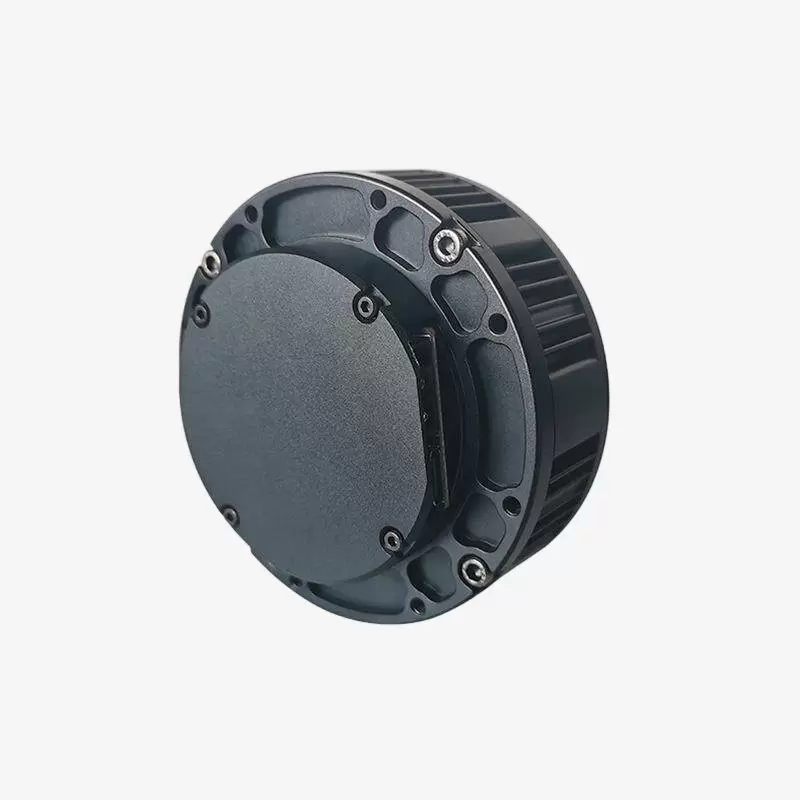
The Robot Joint Motor Actuator: ND-A5215-10 from iHF Group represents a purpose-engineered solution for this constraint layer. Rather than assembling generic servo motors, gearboxes, and encoders into a joint configuration, iHF Group has integrated these subsystems into a unified actuator module optimized specifically for the mechanical, thermal, and control dynamics of robotic articulation.
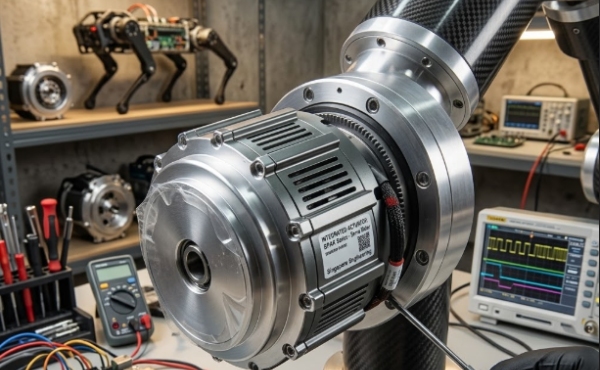
Integrated Electromechanical Architecture
Frameless Torque Motor Topology
Traditional robot joint designs employ housed servo motors coupled to planetary or harmonic drive gearboxes through mechanical couplings. This assembly introduces alignment errors, coupling backlash, and increased axial length that compromise joint compactness and dynamic response.
The ND-A5215-10 utilizes a frameless torque motor architecture in which the rotor is directly integrated into the joint output shaft and the stator into the joint housing. This elimination of separate motor housing and coupling interfaces reduces joint length by 30-40% compared to conventional assemblies, enabling higher payload-to-weight ratios and more compact robot envelopes. The direct-drive torque motor delivers continuous torque of 15 Nm with peak capability of 45 Nm, providing the high torque density at low speeds that robotic joint articulation demands without the efficiency losses and backlash of multi-stage gear reduction.
Harmonic Drive Precision Reduction
While frameless torque motors provide excellent torque density, the output speeds required for typical robot joint motion profiles (typically 30-120 RPM) necessitate speed reduction. The ND-A5215-10 integrates a harmonic drive reducer with gear ratio 100:1, achieving single-stage reduction with zero-backlash characteristics that planetary or cycloidal systems cannot replicate.
Harmonic drive technology employs a flexspline deformed by a wave generator against a circular spline, creating simultaneous multi-tooth engagement that distributes load across 30% of available teeth. This engagement geometry yields positional repeatability of ±10 arc-seconds and torsional stiffness exceeding 20,000 Nm/rad—specifications that translate directly into end-effector precision in multi-axis configurations.
iHF Group's precision robot joint motor actuator manufacturing validates harmonic drive components through profile measurement of flexspline tooth form, circular spline bore geometry, and wave generator bearing runout. Assembly incorporates preloading protocols that optimize meshing contact patterns without inducing excessive flexspline stress that would compromise fatigue life.
Dual-Absolute Encoder Feedback Architecture
Position control in robotic joints requires feedback at two distinct points: motor rotor position for commutation and vector current control, and output shaft position for joint-level servo loop closure. The ND-A5215-10 integrates dual absolute encoders—a 23-bit multiturn encoder on the motor rotor and a 19-bit single-turn encoder on the harmonic drive output.
This dual-encoder configuration enables advanced control strategies: torque ripple compensation through motor position feedforward, backlash compensation through output position feedback, and collision detection through instantaneous torque estimation from motor current and position derivative. The absolute encoding eliminates homing sequences at power-up, reducing robot startup time and enabling safe operation recovery after emergency stops.

Thermal Management and Continuous Duty Performance
Heat Path Engineering
Frameless torque motors generate resistive losses (I²R) in the stator windings that must be dissipated to prevent insulation degradation and demagnetization of rare-earth rotor magnets. In compact joint configurations where the motor is embedded within the joint housing, conventional air-cooling is impractical.
The ND-A5215-10 employs a liquid cooling circuit integrated into the joint housing, with coolant passages machined into the aluminum alloy structure that directly contact the stator lamination stack. This design achieves thermal resistance from winding to coolant of 0.15 K/W, enabling continuous operation at rated torque with coolant inlet temperatures up to 35°C. For applications without facility coolant availability, iHF Group offers a thermally optimized air-cooled variant with extended fin geometry and internal forced convection.
Thermal Modeling and Protection
iHF Group provides thermal models calibrated to specific robot motion profiles, enabling customers to predict winding temperature rise under anticipated duty cycles. Integrated temperature sensors (PT1000 RTDs embedded in the winding end-turns) provide real-time thermal monitoring with over-temperature protection that derates current command before damage thresholds are reached.
Mechanical Integration and Interface Standardization
Hollow Shaft Architecture
The ND-A5215-10 features a central through-bore of 15mm diameter, enabling passage of power cables, signal wiring, pneumatic lines, or optical fibers through the joint center rather than routing externally. This hollow shaft design eliminates cable management complexity in multi-axis robots, reduces snag risks during motion, and maintains clean exterior geometry for collaborative robot applications where human proximity is anticipated.
Mounting Interface Compatibility
iHF Group standardizes the ND-A5215-10 mechanical interfaces to ISO 9409-1 flange patterns, enabling direct integration with commercially available robot arms without custom adapter fabrication. The output shaft incorporates a keyed or splined interface with torque-transmission capacity exceeding the actuator's peak output, preventing interface failure under stall or collision conditions.
Control System Integration
EtherCAT Communication Protocol
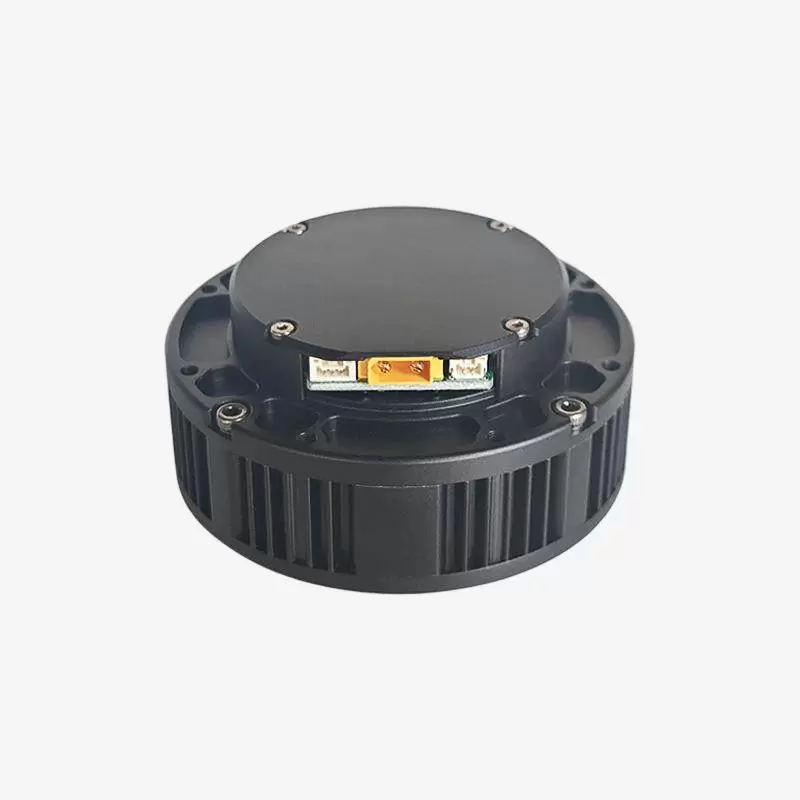
The ND-A5215-10 integrates servo drive electronics with EtherCAT fieldbus communication, enabling cycle times of 1ms for position command updates and 125μs for torque loop closure. This communication bandwidth supports advanced motion control algorithms: impedance control for collaborative robot force limiting, vibration suppression through joint-level acceleration feedback, and predictive maintenance through motor parameter trending.
Safety Function Integration
Functional safety to SIL 3 / PL e is achieved through redundant position monitoring (dual encoders with cross-comparison), safe torque off (STO) circuitry with hardware interlocks, and safe brake control for gravity-loaded axes. iHF Group provides safety documentation including FMEDA analysis and fault injection test reports to support customer CE marking and functional safety certification processes.
Application Domains
Collaborative Robotics
The ND-A5215-10's compact envelope, low reflected inertia, and force-sensitive control capabilities make it suitable for collaborative robot joints where human-robot interaction requires intrinsic safety through torque and position monitoring rather than external safeguarding. The high backdrivability of the harmonic drive enables compliant motion when external forces are applied, with the control system detecting contact forces below 150N at the end-effector.
Surgical and Medical Robotics
Medical robot applications demand sterilization compatibility, electromagnetic compatibility for operating room environments, and positional precision for tissue manipulation. iHF Group offers the ND-A5215-10 with medical-grade surface finishes, biocompatible lubricants, and shielded cable assemblies that meet IEC 60601-1 electromagnetic compatibility requirements.
Semiconductor and Electronics Manufacturing
Cleanroom compatibility (ISO Class 3), minimal particulate generation, and vibration-free operation are essential in wafer handling and electronics assembly. The ND-A5215-10's enclosed harmonic drive and frameless motor eliminate brush wear debris, while precision balancing and bearing preloading minimize vibration transmission to sensitive process equipment.
FAQ
Q: What is the maximum payload capacity when using the ND-A5215-10 in a six-axis robot configuration?
A: Payload capacity depends on arm length, acceleration profiles, and duty cycle, not actuator torque alone. For a typical 800mm reach six-axis robot with the ND-A5215-10 at joints 2, 3, and 4, and smaller actuators at wrist joints, maximum payload is approximately 10-15kg at 1g acceleration with 50% duty cycle. iHF Group provides kinematic simulation tools to optimize actuator selection for specific robot geometries and motion requirements.
Q: Can the ND-A5215-10 operate without liquid cooling in ambient environments up to 40°C?
A: The air-cooled variant maintains rated continuous torque up to 35°C ambient with natural convection, and up to 40°C with derating to 80% of rated torque. For sustained operation above 40°C or in confined installations with restricted airflow, liquid cooling is recommended. iHF Group's thermal simulation service can predict performance for specific installation conditions.
Q: What maintenance interval is recommended for the harmonic drive reducer?
A: Under normal operating conditions (rated torque, moderate shock loading, adequate lubrication), the harmonic drive flexspline exhibits fatigue life exceeding 10,000 hours of operation. iHF Group recommends annual inspection of output bearing condition through vibration analysis, and lubricant replacement every 5,000 operating hours or 2 years, whichever occurs first. The integrated condition monitoring functions can extend these intervals through predictive maintenance algorithms.
Q: Is the ND-A5215-10 compatible with third-party servo controllers?
A: The ND-A5215-10 is optimized for integration with iHF Group's integrated servo drive, but the motor parameters (phase resistance, inductance, back-EMF constant, encoder protocols) are documented to support third-party controller integration. Customers should verify current loop bandwidth and commutation algorithm compatibility with iHF Group's application engineering team before specifying non-integrated controllers.
Q: What is the backlash specification, and how does it affect robot repeatability?
A: The harmonic drive reducer achieves zero backlash through its elastic meshing geometry. Measured hysteresis at the output shaft is typically ±3 arc-seconds under no-load conditions. In practical robot applications, structural compliance and encoder resolution dominate repeatability rather than gear backlash, with the ND-A5215-10 contributing less than 5% of total system repeatability error in well-designed kinematic chains.


 EN
EN en
en vi
vi it
it es
es th
th tr
tr ja
ja pt
pt ko
ko ru
ru fr
fr de
de ar
ar Request Quote