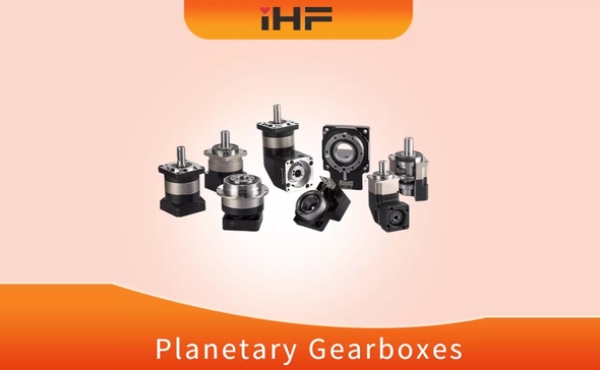
Position: Home > News Center > Industry News > How Right Angle Bevel Gearboxes Improve Space-Saving Mechanical Design
How Right Angle Bevel Gearboxes Improve Space-Saving Mechanical Design
May. 28, 2026 Views:263
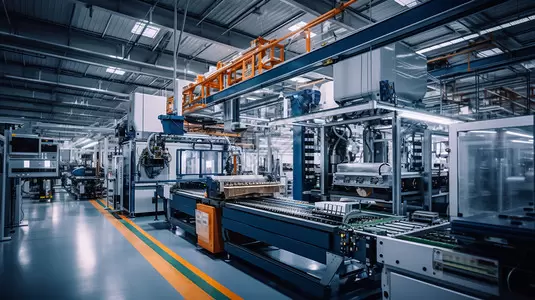
In modern mechanical engineering, system designers are increasingly required to achieve two often competing goals: higher power density and smaller installation space. This challenge is especially critical in automation equipment, packaging machinery, robotics, and industrial drive systems.
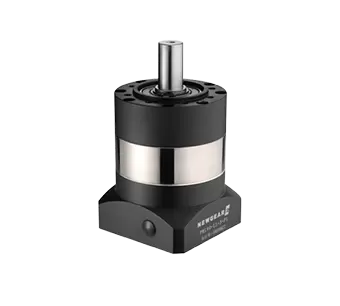
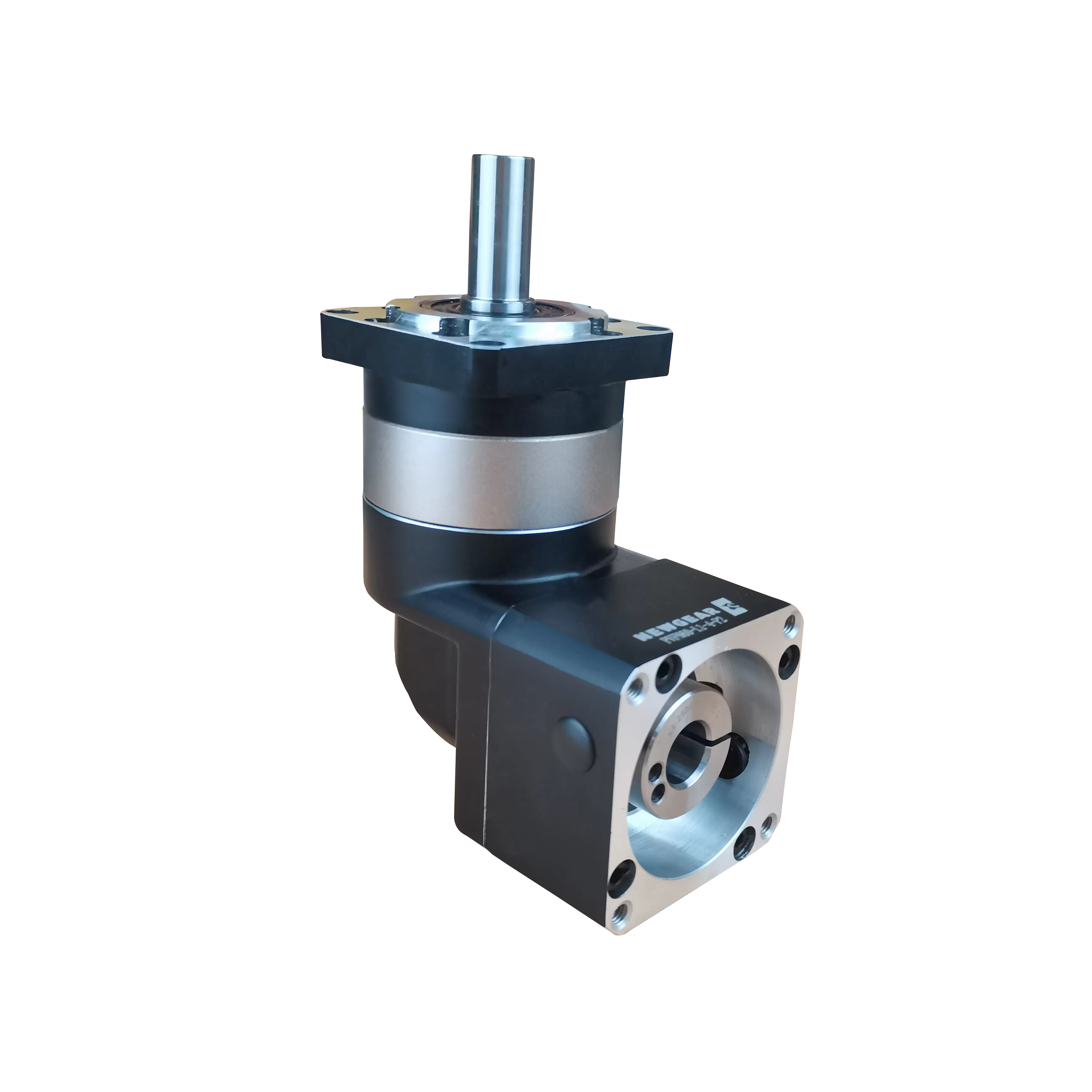
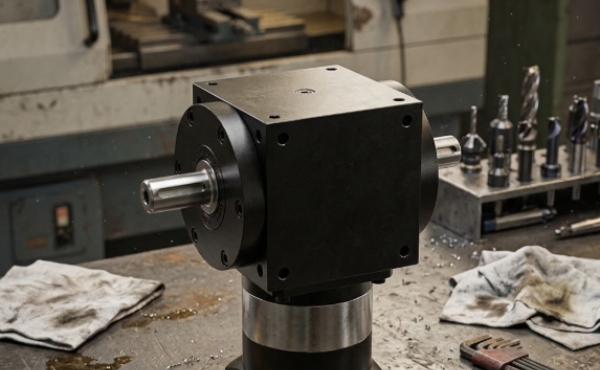
The Right Angle Bevel Gearbox has become a key solution in addressing this requirement. By converting motion at a 90-degree angle while maintaining high torque transmission efficiency, it enables compact mechanical layouts without compromising performance.
Core Mechanical Principle of Right Angle Bevel Gearboxes
A Right Angle Bevel Gearbox typically uses spiral bevel gear pairs to transmit motion between intersecting shafts, usually positioned at 90 degrees.
The spiral bevel design offers several mechanical advantages:
● Smooth tooth engagement
● Reduced vibration during operation
● Higher load-carrying capacity
● Improved transmission efficiency
Compared with straight bevel gear systems, spiral bevel configurations provide better contact ratio, which directly improves stability under dynamic loading conditions.
This makes them suitable for applications where:
● Continuous operation is required
● Load variation is frequent
● Precision motion control is necessary
Structural Features and Engineering Advantages
1. Right-Angle Output with Spiral Bevel Gears
One of the defining features of a Right Angle Bevel Gearbox is its ability to deliver torque output at a 90-degree angle.
This design allows engineers to:
● Reduce system footprint
● Simplify mechanical layout
● Improve integration flexibility
In compact machinery systems, this is particularly valuable because it eliminates the need for complex belt or chain transmission layouts.
2. Compact Square Flange and Straight Gear Configuration
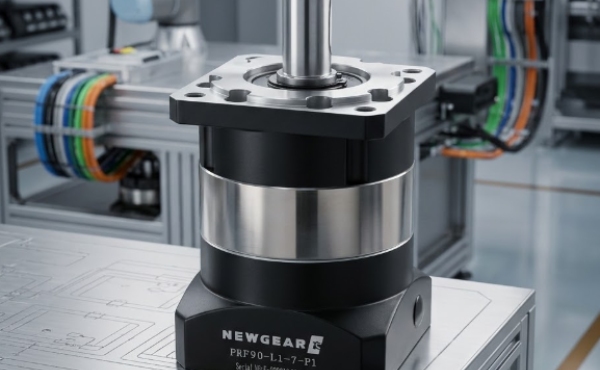
The square flange structure combined with straight gear design provides:
● Simplified installation process
● Stable mechanical mounting interface
● Cost-effective structural reliability
This configuration reduces assembly complexity while maintaining structural rigidity, making it suitable for mass production machinery and standardized industrial systems.
From a system integration perspective, it helps reduce:
● Installation time
● Alignment errors
● Maintenance complexity
3. Low Backlash for Precision Applications
Modern industrial motion systems increasingly require precise positioning accuracy.
A key performance characteristic of this gearbox type is low backlash, typically in the range of 8–16 arcmin.
Low backlash directly improves:
● Positioning accuracy
● Motion repeatability
● Control system responsiveness
This is particularly important in:
● CNC auxiliary systems
● Packaging automation
● Robotic motion units
● Conveyor positioning systems
Reduced mechanical clearance also improves system stability during start-stop cycles and directional changes.
4. High Torque Capacity and Structural Durability
Right Angle Bevel Gearboxes are designed to handle high torque loads while maintaining compact size.
This is achieved through:
● Hardened alloy steel gears
● Optimized tooth geometry
● Reinforced housing structure
● Precision heat treatment processes
The result is a gearbox capable of operating under:
● Continuous industrial load cycles
● Shock loading conditions
● High-speed operational environments
Durability is especially critical in automated production lines where downtime directly impacts productivity.
Application Scenarios Across Industries
Right Angle Bevel Gearboxes are widely used across multiple industrial sectors due to their flexibility and compact structure.
Industrial Automation Systems
Used in:
● Motion transfer units
● Assembly automation
● Robotic joint systems
Packaging Machinery
Common in:
● Conveyor angle drive systems
● Filling and sealing machines
● Labeling equipment
Material Handling Systems
Applied in:
● Sorting systems
● Lifting mechanisms
● Transfer conveyors
Food and Pharmaceutical Equipment
Preferred due to:
● Compact hygiene-friendly installation
● Smooth and stable transmission
● Low maintenance requirements
General Mechanical Engineering
Used in:
● Agricultural machinery
● Light industrial equipment
● Modular machine design
Mechanical Efficiency and System Integration Benefits
One of the most important advantages of a Right Angle Bevel Gearbox is its contribution to overall system optimization.
By replacing complex transmission layouts, it helps:
● Reduce mechanical losses
● Improve system compactness
● Simplify maintenance structure
● Enhance modular machine design
From an engineering standpoint, reducing mechanical complexity often improves system reliability over time.
Gearbox performance depends heavily on manufacturing precision, including:
● Gear tooth accuracy
● Shaft alignment
● Bearing selection
● Housing rigidity
Even minor deviations can result in:
● Increased vibration
● Higher noise levels
● Reduced efficiency
● Shortened service life
This is why precision machining and strict quality control are essential in gearbox production.
iHF Group and Industrial Gearbox Development
Within industrial power transmission systems, iHF Group focuses on engineering-driven gearbox solutions designed for real-world industrial conditions.
Development priorities typically include:
● Structural optimization for compact installation
● Precision gear machining processes
● High torque density design
● Long-term operational stability
In modern equipment design, gearboxes are not standalone components but integrated elements of complete mechanical systems. Their performance directly influences machine accuracy, energy efficiency, and operational stability.
Selection Considerations for Engineering Applications
When selecting a Right Angle Bevel Gearbox, engineers typically evaluate:
Torque Requirements
Ensuring the gearbox matches peak and continuous load demands.
Installation Constraints
Space limitations and mounting configuration requirements.
Precision Level
Backlash tolerance and positioning accuracy.
Duty Cycle
Continuous or intermittent operation affects durability requirements.
Environmental Conditions
Temperature, humidity, and contamination exposure influence material selection.
视频
Conclusion
The Right Angle Bevel Gearbox plays a critical role in modern mechanical systems where compact design, efficient power transmission, and precise motion control are required.
Its key advantages include:
● Compact right-angle power transmission
● Spiral bevel gear efficiency
● Low backlash precision control
● High torque durability
● Flexible industrial integration
As machinery systems continue to evolve toward higher precision and smaller footprints, demand for optimized gearbox solutions will continue to grow.
Within this landscape, iHF Group contributes to industrial transmission development by focusing on reliability, engineering precision, and application-oriented gearbox design.
This website uses cookies to provide you with a safer and more personal experience. By accepting, you agree to the Cookie Policy and the use of cookies for advertising and analytics purposes.


 EN
EN en
en vi
vi it
it es
es th
th tr
tr ja
ja pt
pt ko
ko ru
ru fr
fr de
de ar
ar Request Quote